Strengthen the government and bring it down 147
At Townhall today, George Will expresses this opinion:
There are legislative miles to go before the government will be emancipated from its health care myopia, but it is not too soon for a summing up. Whether all or nothing of the legislation becomes law, Barack Obama has refuted critics who call him a radical. He has shown himself to be a timid progressive.
His timidity was displayed when he flinched from fighting for the boldness the nation needs — a transition from the irrationality of employer-provided health insurance. His progressivism is an attitude of genteel regret about the persistence of politics.
On this judgment we cannot agree with George Will (unless he is intending to be ironic, which we suspect and hope he is).
Obama is insisting almost hysterically on health legislation being passed, no matter what horrors it foists on the people of the United States provided only that it delivers control of a sizable portion of the economy into the hands of his government.
Now one has only to read what has been published about Obama’s parents, upbringing, and career to see that he is a born, bred, and thoroughly committed Marxist radical. Why otherwise would he appoint radical leftists, including self-confessed Communists of various stripes, some of them Maoists, to advisory posts and “Czardoms” in the White House?
And while this sort of thing, reported and discussed by Scott Wheeler, is happening under his administration, it’s hard to believe he has faded into nothing more dangerous than a “timid progressive”:
A Marxist group that has demanded the “destruction” of the U.S. and issued a call “to bring this government down” is the recipient of stimulus funds from the Obama American Recovery and Reinvestment Act of 2009 (ARRA). This same group, the Brecht Forum, has also called for the complete takeover of insurance companies and farms [!] in America.
The controversial stimulus bill, as ARRA is better known, provided funds for the New York State Council on the Arts (NYSCA), which promptly granted the New York City-based Brecht Forum $5,000 in 2009 and $9,000 in 2010. The NYSCA had previously announced in 2008 that due to state budget cuts it would no longer be able to fund 573 organizations that it had previously funded. One of the groups on the list to be slashed was the Brecht Forum. After NYSCA secured $399,000 in stimulus money, the Brecht Forum once again had funding.
The Brecht Forum is host to the New York Marxist School and displays this statement on their website:
“Can society be changed significantly for the better? What kind of changes would be needed? and, Who could bring about such changes?” …
In 1975, a group of civil rights, community, labor, and student activists came together to found The Brecht Forum’s New York Marxist School. They saw the study of Marxism as central, not as a dogma but as a living current of thought and as a vital tool for understanding capitalist society.
In a September 2009 lecture at the Brecht Forum, Jed Brandt, a longtime communist, political activist and outspoken atheist [at least he has this much common sense – JB] offered the following instructions:
“We have to bring this Government down! We have to help destroy this system and that requires increasing the alienation that working people and oppressed people feel. The way this change is going to happen is the destruction of The United States of America!” [“Increasing the alienation”, ie deliberately piling misery on the underclass until they rise in revolutionary rebellion, continues to be an orthodox formula of Marxist theory though it has never, fortunately, worked that way in practice – JB]
Fox News Channel picked up on Brandt’s call to action and played clips several times the week of March 1st. My own investigation uncovered the link to federal stimulus dollars providing financial support for the Brecht Forum. The grants from NYSCA were ostensibly provided for artistic projects, for example, the NYSCA website shows the following as the description for the Brecht Forum grant:
“The Brecht Forum’s 09-10 program features workshops in the participatory theater techniques developed by the noted Brazilian director Augusto Boal. The program includes monthly workshops led by members of the Theater of the Oppressed Laboratory and two master workshops led by Augusto Boal.” …
“Augusto Boal has defined Theater of the Oppressed as a rehearsal for revolution.”
The website further describes its mission as using “interactive theater as an organizing tool” and works with “educators, human service and healthcare workers, union organizers and community activists” to solve perceived problems.
Almost choking on Communist jargon, the Brecht Forum is shouting its revolutionary intentions. The NYSCA obviously knows exactly what it’s subsidizing. The Obama administration knows what the NYSCA’s political agenda is. It gets its grants because it has that agenda. It is radically leftist. There’s nothing timid about it.
Grow and strengthen government, or bring it down? Is President Obama conscious of being caught on the horns of a remarkable dilemma – how to square his office with his ideology? How does he reconcile his present job with his old objectives? Does it trouble him that he is the power Jed Brandt wants to overthrow?
A mind even more suspicious than ours might wonder whether the New Left program of “the long march through the institutions” set Obama climbing to the pinnacle of power with the intention of bringing about “the destruction of the United States of America”. But surely Obama is not as extreme as all that – is he?
Kill the bill 93
If enough Democratic votes are found to pass the monstrous health care legislation that will condemn America to the terminal illness of socialism, it will mean that many Democrats have decided to support their party rather than listen to their constituents, and so risk not being re-elected in November.
Why aren’t they troubled by this prospect? Mark Steyn and Andrew McCarthy have an explanation. Mark Steyn writes:
A big-time GOP consultant was on TV crowing that Republicans wanted the Dems to pass ObamaCare because it’s so unpopular it will guarantee a GOP sweep in November.
Okay, then what? You’ll roll it back — like you’ve rolled back all those other unsustainable entitlements premised on cobwebbed actuarial tables from 80 years ago?
Like you’ve undone the Department of Education and of Energy and all the other nickel ‘n’ dime novelties of even a universally reviled one-term loser like Jimmy Carter?
Andrew McCarthy concluded a shrewd analysis of the political realities thus:
“Health care is a loser for the Left only if the Right has the steel to undo it. The Left is banking on an absence of steel. Why is that a bad bet?”
Indeed.
Look at it from the Dems’ point of view. You pass ObamaCare. You lose the 2010 election, which gives the GOP co-ownership of an awkward couple of years.
And you come back in 2012 to find your health care apparatus is still in place, a fetid behemoth of toxic pustules oozing all over the basement, and, simply through the natural processes of government, already bigger and more expensive and more bureaucratic than it was when you passed it two years earlier.
If they are right – and we think they are – then there is only one sure way of killing off this “fetid behemoth” right now.
The Republicans must firmly decide and declare that they will repeal the legislation when they are returned to power. They must say it and mean it – and of course, if the Democrats think it’s only a bluff and go ahead anyway, then, when the time comes, they must do it.
There is no alternative 16
Margaret Thatcher famously said when she was Prime Minister of Great Britain that “There is no alternative”, meaning no alternative to the free market if prosperity and liberty were to be regained. Thatcherites turned the four words into a cheerful, optimistic slogan.
She was right, of course. For a few years during her premiership – a small Silver Age – the British became a (comparatively) free, property-owning, share-holding people. Then the socialists who had been in power since the end of World War II, whether they’d called themselves Conservatives or Labour, came back into power as the Labour Party for thirteen years, and ruined the country. At last the Conservative Party under the leadership of David Cameron may be returned in the forthcoming general election, but it will make no difference.
Now the words “there is no alternative” have another, completely different meaning.
Melanie Phillips explains with this article in the Spectator:
David Cameron’s strategy is fundamentally and, we can now see, finally and irrevocably flawed. His message, as defiantly and unequivocally re-stated today, is one of radical change. The key question this provokes, however, is change from what?
The people are indeed desperate for change – but from Gordon Brown and the Labour government and what it stands for. What Cameron defiantly and unequivocally offers is radical change from conservatism to produce an agenda that, far from promising a radical change from Labour, is merely a paler version of Labour.
So when millions of natural conservatives yearn for a radical and unequivocal change from the nihilism and injustice and bullying of political correctness, for a change from the deliberate gerrymandering of the demographic and cultural identity of this country, for a change from the enslavement of frivolous and destructive ideology, for a change from the destruction of the traditional family and the appeasement of radical Islamism, for a change from the empty and mendacious promises of spin, they get instead ‘the party of the (failing) NHS’ committed to green diversity and with even a smug reference to the women candidates forced upon local constituency parties, a promise to be tough and honest and upfront in cutting spending to tackle the deficit while financing a new army no less of health visitors, a commitment to support marriage in the tax system but also (presumably) unmarried couples in the benefit system, nothing at all about Islamism, nor the destruction of the country’s powers of self government through the EU, nor the deliberate and covert destruction of its demographic and cultural identity except for a glancing reference to cutting immigration.
The political crystal balls on the western side of the Atlantic project the same message of hopelessness.
Mark Steyn, writing in Investor’s Business Daily, laments that a change from a Democratic to a Republican majority in Congress will in all probability make no difference to America’s descent into the terminal illness of socialism:
So there was President Obama giving his bazillionth speech on health care, droning yet again that “now is the hour when we must seize the moment,” the same moment he’s been seizing every day of the week for the past year, only this time his genius photo-op guys thought it would look good to have him surrounded by men in white coats.
Why is he doing this? Why let “health” “care” “reform” stagger on like the rotting husk in a low-grade creature feature who refuses to stay dead no matter how many stakes you pound through his chest?
Because it’s worth it. Big time. I’ve been saying in this space for two years that the governmentalization of health care is the fastest way to a permanent left-of-center political culture.
It redefines the relationship between the citizen and the state in fundamental ways that make limited government all but impossible.
In most of the rest of the Western world, there are still nominally “conservative” parties, and they even win elections occasionally, but not to any great effect.(Let’s not forget that Jacques Chirac was, in French terms, a “conservative.”) The result is a kind of two-party one-party state.
Right-of-center parties will once in a while be in office, but never in power, merely presiding over vast left-wing bureaucracies that cruise on regardless.
Republicans seem to have difficulty grasping this basic dynamic. …
Once the state swells to a certain size, the people available to fill the ever expanding number of government jobs will be statists — sometimes hard-core Marxist statists, sometimes social-engineering multiculti statists, sometimes fluffily “compassionate” statists, but always statists.
The short history of the postwar welfare state is that you don’t need a president-for-life if you’ve got a bureaucracy-for-life: The people can elect “conservatives,” as the Germans have done and the British are about to do, and the left is mostly relaxed about it because, in all but exceptional cases (Thatcher), they fulfill the same function in the system as the first-year boys at wintry English boarding schools who for tuppence-ha’penny or some such would agree to go and warm the seat in the unheated lavatories until the prefects strolled in and took their rightful place.
Republicans are good at keeping the seat warm. A big-time GOP consultant was on TV crowing that Republicans wanted the Dems to pass ObamaCare because it’s so unpopular it will guarantee a GOP sweep in November.
Okay, then what? You’ll roll it back — like you’ve rolled back all those other unsustainable entitlements premised on cobwebbed actuarial tables from 80 years ago?
Like you’ve undone the Department of Education and of Energy and all the other nickel ‘n’ dime novelties of even a universally reviled one-term loser like Jimmy Carter? …
Look at it from the Dems’ point of view. You pass ObamaCare. You lose the 2010 election, which gives the GOP co-ownership of an awkward couple of years.
And you come back in 2012 to find your health care apparatus is still in place, a fetid behemoth of toxic pustules oozing all over the basement, and, simply through the natural processes of government, already bigger and more expensive and more bureaucratic than it was when you passed it two years earlier.
That’s a huge prize, and well worth a midterm timeout.
I’ve been bandying comparisons with Britain and France, but that hardly begins to convey the scale of it. ObamaCare represents the government annexation of “one-sixth of the U.S. economy” — i.e., the equivalent of the entire British or French economy, or the entire Indian economy twice over.
Nobody has ever attempted this level of centralized planning for an advanced society of 300 million people.
Even the control freaks of the European Union have never tried to impose a unitary “comprehensive” health care system from Galway to Greece. The Soviet Union did, of course, and we know how that worked out.
This “reform” is not about health care … it’s about government.
Once you look at it that way, what the Dems are doing makes perfect sense. For them.
Britons awake, and have a cup of tea! 10
There could be no better symbol of old British common sense, kindness, friendliness, normality, sanity, good cheer and healing than a cup of tea. (Usually served with milk and sugar.) Any disaster can be faced, dealt with, overcome, remedied, survived, reduced, or eliminated once you’ve had a cup of good strong tea. In the Kingdom of the rainy islands, tea is a panacea.
Your spouse left you? Have a cup of tea.
Your horse came in last? Your bus was bombed and you lost a leg? Your TV’s on the blink? You trod on your glasses? Your Social Security benefit hasn’t come through? You’ve been told to wait two years for an urgent operation? The Labour Government’s bankrupted you and the whole country?
Never mind, have a cup of tea.
So however unsuitable it may seem to hold a Tea Party in imitation of the the American Tea Party Movement in the very country against which the first political Tea Party launched a Revolution, in another way the idea could not be more British.
Daniel Hannan, British Conservative Party member of the European Parliament, held a Tea Party in Brighton, UK, on Saturday, February 27, 2010, with only two days’ notice – chiefly through the Telegraph, where his columns appear. He spoke about the fiscal irresponsibility of the government.
It was a small beginning, but the idea might spread and a British Tea Party movement grow into a nation-wide protest against big government and high taxation.
Here Hannan thanks the 300 or so who attended:
Thanks to everyone who came to the Brighton Tea Party, and apologies to those who couldn’t get in. We opened and filled an adjoining room, but it was still quite a squash. The hotel manager told me afterwards that there had been more than 300 people present, not counting those who had had to be turned away. Not bad for a meeting organised with two days’ notice.
If you can run a tea-party in Brighton Pavilion – the constituency which the Greens are most hopeful of winning – you can run one anywhere. You don’t have to be a small-government Conservative to feel that taxation, spending and borrowing are currently too high.
Let me say it one more time. Gordon Brown has doubled the national debt. Every second, it rises by another 5,000 pounds. Our deficit is 12.6 per cent of GDP compared to Greece’s 12.7. All this despite the additional trillion pounds taken in taxation since 1997.
We can’t afford another month of this, let alone another five years.
Thanks to the Freedom Association for helping to put everything together …
The Freedom Association is our partner organization. We are once again proud of what it’s doing for the cause of freedom in socialist Britain.
Is America in decline? 235
Is the world entering a post-American era? Will the 21st century be dominated by some other power, or several others?
In the splendid speech that John Bolton delivered at the Conservative Political Action Conference in February 2010, he said of Obama, “He is the first post-American president.”
In Obama’s eyes, American superpower status is already over. The decline is happening. There’s no reason to regret it, and it would be pointless and unnecessary to try to halt or reverse it. Obama is content to let America be a nation among the nations, no different in any important respect, and certainly no better. “He sees American decline as a kind of natural phenomenon,” Bolton said.
In Bolton’s own view, however, America is still exceptional and still the one and only superpower. If its status as such is under threat, that threat proceeds from Obama himself, who, almost casually – not caring very much, as John Bolton remarked, about foreign and national security policy – is himself weakening it.
What Obama does care about is domestic policy. To achieve his redistributionist goals he has put America into crushing debt; and being determined, it seems, to turn America into a European-style socialist state, he can only make the debt vaster and heavier. That alone weakens America.
China is America’s chief creditor, but that does not mean China is now a second superpower. A China growing in wealth and confidence, and becoming an increasingly significant world actor, may pose an economic threat to America but is not, or not yet, a rival world power. Militarily it is far from a match. Militarily, America is still far and away the most powerful nation.
But there again, if Obama has his way, it won’t be for much longer. He has, in Bolton’s words, an “incredibly naïve idea” that if the US would get rid of its own nuclear weapons, other countries would give up theirs; those that do not have them but want them – such as Iran and North Korea – would abandon their intense efforts to obtain them; and the world would live at peace forever after. This belief or ambition represents, as John Bolton put it, “a pretty deep-seated strain in the left wing of the Democratic Party.” Obama will soon negotiate an arms control agreement with Russia by which he will undertake substantially to reduce America’s nuclear capability. America will not develop new nuclear weapons, or arms in outer space, or even keep its existing arsenal battle-ready by testing for safety and reliability. It is as if America had no enemies; as if America were not under attack; as if 9/11 had never happened; and as if Iran and North Korea would not drop nuclear bombs on America and its allies if they could do it and get away with it.
Furthermore, with the rest of the dreaming Left both at home and internationally, he aspires to another vision of a new earth: one that is not only sweetly irenic but held forcibly in union by a supreme governing authority. Those proposals for world taxes that we hear of; the intricate business of trading in carbon indulgences in the name of saving the earth from being consumed by fire or ice; international treaty regulations that would result in banning the private ownership of guns – all these are measures to realize the tremendous objective of “world governance”. It would mean the end of American independence, the end of national sovereignty. It would mean that the Revolution was lost, as Bolton said.
In a sense it would be the end of America, because America is an idea of liberty. And it is an idea that the world needs. Its loss would be a colossal disaster, a tragedy for the whole human race.
Can America be saved?
In his book titled The Post-American World, Fareed Zakaria asserts that “America is closing down”, but allows that it “won’t be demoted from its superpower position in the foreseeable future” because “it’s not that the United States has been doing badly over the last two decades. It’s that, all of a sudden, everyone else is playing the game.”
America can “remain a vital, vibrant economy, at the forefront of the next revolutions in science, technology and industry, as long as it can embrace and adjust to the challenges confronting it”.
“The challenges” come from other nations, now rising, which he groups together as “the rest”.
China is the first of them because it is becoming an economic giant. The 21st century, he considers, may be the Chinese century.
What if [China ] quietly positions itself as the alternative to a hectoring and arrogant America? How will America cope with such a scenario – a kind of Cold War, but this time with a vibrant market economy, a nation that is not showing a hopeless model of state socialism, or squandering its power in pointless military interventions? This is a new challenge for the United States, one it has not tackled before, and for which it is largely unprepared.
Next in line is India. Poorer but democratic, India is “the ally”. Then come Brazil and Chile (plausibly); South Africa (less plausibly); and (implausibly) Russia. (Russia is a demographic basket case.)
Ironically, Zakaria says, these nations are rising because they learnt from America:
For sixty years, American politicians and diplomats have traveled around the world pushing countries to open their markets, free up their politics, and embrace trade and technology. … We counseled them to be unafraid of change and learn the secrets of our success. And it worked: the natives have gotten good at capitalism.
America, then, has not been a malign power, or not always. In Roosevelt’s day other countries believed that “America’s mammoth power was not to be feared”. It was after it had won the Cold War, when it became the only superpower, that it began to go to the bad. “Ever since the collapse of the Soviet Union, the United States has walked the world like a colossus, unrivaled and unchecked”, and this “has made Washington arrogant, careless, and lazy.” Furthermore, he tell us, “people round the world worry about living in a world in which one country has so much power.”
To relieve that worry, America “must reduce its weaponry and work towards a non-nuclear world.” It is hypocritical for the US to insist that other countries should not have nuclear weapons while it is hoarding a nuclear arsenal of its own. By giving them up it would “gain credibility”, an end he apparently considers so desirable that it would be worth risking the nation’s very survival to achieve it.
The summer of 2002, Zakaria says, was “the high water-mark of unipolarity”. The world felt sympathy for America after 9/11. America went to war in Afghanistan, which was not good but not too bad. But then it invaded Iraq, which was very bad, and the world’s sympathy dried up. America was being too “unilateral”, too “imperial and imperious”.
George W Bush and “the nefarious neoconservative conspiracy” antagonized the world. He and his conspirators “disdained treaties, multilateral organizations, international public opinion, and anything that suggested a conciliatory approach to world politics.”
So the world’s dislike, contempt, and fear of America were justified, or at least understandable, in the light of the foreign policies of the “arrogant” Bush administration. Zakaria even claims that the animosity filled the Republicans – already full of “chest-thumping machismo” – with pride.
He asks:
Can Washington adjust and adapt to a world in which others have moved up? Can it respond to shift in economic and political power? … Can Washington truly embrace a world with a diversity of voices and viewpoints? Can it thrive in a world it cannot dominate?
The advice he gives to “Washington” for success in adjusting, adapting, responding, embracing, and thriving is to be conciliatory, apologetic. It must listen more; proclaim universal values”, but “phrase its positions carefully”; be like the chair of a board gently guiding a group of independent directors. America must “learn from the rest”. The president must meet more non-government people, have smaller entourages, rely more on diplomacy. Consultation, cooperation, compromise are the key words. He objects to such accomodations being called appeasement. Consult and cooperate, he urges, with Russia, and with “multilateral institutions” such as the UN, NATO, AFRICOM, OAS, and the International Criminal Court. (Even internally, the US legal system “should take note of transnational standards”.)
The federal government has been “too narrow-minded” about terrorism. When bin Laden got America to “come racing out to fight” him (in response to 9/11) this was “over-reaction.” Zakaria’s advice: “take it on the chin” and “bounce back”. The government must stop thinking of terrorism as a national security issue, and think of it as criminal activity carried out by “small groups of misfits”. Although Democrats were on the whole “more sensible” about terrorism, both parties, he says, spoke “in language entirely designed for a domestic audience with no concern for the poisonous effect it has everywhere else.” His solution is better airport control round the world. The more urgent problem in his view is that American Muslims have become victims of over-reaction to terrorist attacks. Instead of being “questioned, harassed, and detained” they should, he urges, “be enlisted in the effort to understand the appeal of Islamic fundamentalism.”
Zakaria does not consider himself anti-American. He does not even see himself as a man of the left. He reiterates that he is a free marketeer. It is because America became “suspicious of free markets”, he says, that partly explains its “closing down”.
He wrote his book before the economic crisis. He saw a globalized economy bringing about an increasingly prosperous world in which the poorest nations were rising strongly enough for him to declare that “the world is swimming in capital”, and “there really isn’t a Third World any more “. But even then the dollar was sliding, and America was showing signs of being “enfeebled”.
At a military-political level America still dominates the world, but the larger structure of unipolarity – economic, financial, cultural – is weakening… every year it becomes weaker and other nations and actors grow in strength.
For all its military might, its chest-thumping phase is over and now it is “cowering in fear”. It must, he says, “recover its confidence.” ‘It must stop being “a nation consumed by anxiety”, with a tendency to “hunker down”, unreasonably “worried about unreal threats” such as terrorism, and rogue nations like North Korea and Iran. (Iran, he explains, has good reason to fear the United States, with its armies on two of its borders. It’s only to be expected that Iran would try to arm itself with nuclear bombs and missile delivery systems. He does not explain why America should not fear this as a real threat.)
He is certain about what America needs to do to propitiate and serve the world it has alienated. It should ‘‘build broad rules by which the world will be bound’’, rather than pursue “narrow interests”.
What the world really wants from America is … that it affirm its own ideals. That role, as the country that will define universal ideals, remains one that only America can play.
We know Obama has read Zakaria’s book, or at least looked into it, because there is a photograph of him holding it, one finger marking his place. Obama is doing much that Zakaria advises in foreign affairs. But that’s less likely to be because the writer has impressed the president with his arguments than because they have both drunk from the same ideological well.
Obama’s foreign policy lets us see if Zakaria’s theory works. So far it has not.
So is America’s decline beyond all remedy?
It’s a relief to turn from Zakaria’s dull and weakly reasoned book with its uncongenial credo to an article titled The Seductions of Decline (February 2, 2010) by brilliantly witty and insightful Mark Steyn. If America believes it is in decline, he says, it will be. It is a self-fulfilling prophecy. The view that America has been too arrogant a power; that it is not and should not be exceptional; that humility and apology are required of it; that only endlessly patient negotiation in a spirit of compromise will improve foreign relations and dissuade states like North Korea and Iran from acquiring nuclear arms; that Islamic terrorism should be treated as crime and not as the jihad its perpetrators declare it to be; that Russia should be consulted on, say, the deployment of American missile defense; and that the US should reduce its nuclear arsenal and work towards a non-nuclear world – will bring about the decline.
National decline is psychological – and therefore what matters is accepting the psychology of decline.
His answer to the question “is America set for decline?” is yes, because of the policies of Obama and the Democrats, which arise from their acceptance of decline.
Strictly on the numbers, the United States is in the express lane to Declinistan: Unsustainable entitlements, the remorseless governmentalization of the American economy and individual liberty, and a centralization of power that will cripple a nation of this size. Decline is the way to bet.
American decline, he says, “will be steeper, faster and more devastating than Britain’s – and something far closer to Rome’s.” It will not be like France’s, or Austria’s.
Why did decline prove so pleasant in Europe? Because it was cushioned by American power. The United States is such a perversely non-imperial power that it garrisons not ramshackle colonies but its wealthiest “allies”, from Germany to Japan. For most of its members, “the free world” has been a free ride.
And after “Washington’s retreat from la gloire” as hegemon of the world, when America “becomes Europe in its domestic disposition and geopolitical decline, then who will be America?”
Of the many competing schools of declinism, perhaps the most gleeful are those who salivate over the rise of China. For years, Sinophiles have been penning orgasmic fantasies of mid-century when China will bestride the world and America will be consigned to the garbage heap of history. It will never happen: As I’ve been saying for years, China has profound structural problems. It will get old before it gets rich.
Not China then. Russia?
The demographic deformation of Tsar Putin’s new empire is even more severe than Beijing’s. Russia is a global power only to the extent of the mischief it can make on its acceleration into a death spiral.
Not Russia. How about the Caliphate that the terrorist war is being fought to establish?
Even if every dimestore jihadist’s dreams came true, almost by definition an Islamic imperium will be in decline from Day One.
So what might the post-American world look like? Mark Steyn’s answer is deeply depressing:
The most likely future is not a world under a new order but a world with no order – in which pipsqueak states go nuclear while the planet’s wealthiest nations, from New Zealand to Norway, are unable to defend their own borders and are forced to adjust to the post-American era as they can. Yet, in such a geopolitical scene, the United States will still remain the most inviting target – first, because it’s big, and secondly, because, as Britain knows, the durbar moves on but imperial resentments linger long after imperial grandeur.
But nothing is inevitable, and Mark Steyn offers a last hope. Though “decline is the way to bet”, the only thing that will ensure it is “if the American people accept decline as a price worth paying for European social democracy.”
When in 2008 a majority of the American electorate voted for Barack Obama to be president of the United States, it seemed that the deal had been made. But now Obama is failing, the Democratic majority is under threat, and the Tea Party movement is reclaiming the Revolution.
This could be another American century after all.
Jillian Becker March 1, 2010
The colossal shipwreck of Europe 22
Socialism doesn’t work.
Mark Steyn explains the colossal shipwreck of Europe, and observes that the Democrats are hell-bent on steering America on to the same rocks.
Here’s part of what he writes:
For Germany an Obama-sized stimulus was out of the question simply because its foreign creditors know there are not enough young Germans around ever to repay it. Over 30 percent of German women are childless; among German university graduates, it’s over 40 percent. And for the ever-dwindling band of young Germans who make it out of the maternity ward there’s precious little reason to stick around. Why be the last handsome blond lederhosen-clad Aryan lad working the late shift at the beer garden in order to prop up singlehandedly entire retirement homes? And that’s before the EU decides to add the Greeks to your burdens. Germans, who retire at 67, are now expected to sustain the unsustainable 14 monthly payments per year of Greeks who retire at 58.
Think of Greece as California: Every year an irresponsible and corrupt bureaucracy awards itself higher pay and better benefits paid for by an ever-shrinking wealth-generating class. And think of Germany as one of the less-profligate, still-just-about-functioning corners of America such as my own state of New Hampshire: Responsibility doesn’t pay. You’ll wind up bailing out, anyway. The problem is there are never enough of “the rich” to fund the entitlement state, because in the end it disincentivizes everything from wealth creation to self-reliance to the basic survival instinct, as represented by the fertility rate. In Greece, they’ve run out of Greeks, so they’ll stick it to the Germans, like French farmers do. In Germany, the Germans have only been able to afford to subsidize French farming because they stick Americans with their defense tab. And, in America, Obama, Pelosi and Reid are saying we need to paddle faster to catch up with the Greeks and Germans. What could go wrong?
A transparently cynical ploy 133
It seems that Obama continues to take conservatives for fools, believing that he can easily trick or bribe them into acting against their own interest and the interest of the nation as they understand it.
From The Heritage Foundation:
Facing new polling showing that 52% of the American people believe that he does not deserve a second term in office, President Barack Obama attempted to reach out to conservatives yesterday by promising $8.33 billion in federal loan guarantees for a pair of nuclear reactors in Georgia. The President told an enthusiastic audience of union officials in Lanham, MD: “Those who have long advocated for nuclear power — including many Republicans — have to recognize that we will not achieve a big boost in nuclear capacity unless we also create a system of incentives to make clean energy profitable.”
In other words, as newspapers across the country have noted this morning, President Obama’s nuclear loan guarantee announcement is really nothing more than a transparently cynical attempt to revive his moribund cap-and-trade/energy tax proposals currently languishing in the Senate. In reality, the $8.3 billion announced yesterday is actually just a first down payment on the $18.5 billion in loan guarantees that were authorized under the Energy Policy Act of 2005. While the administration should be applauded for following the law, loan guarantees are not enough to recreate a robust nuclear industry in the United States. Indeed, an expansion of the program could do much more to stifle the industry’s growth than to help it.
And expanding the nuclear loan guarantee program is exactly the approach the Obama administration plans to pursue. Their 2011 budget provides an additional $36 billion in loan guarantee authority to nuclear energy projects. When added to the $18.5 billion previously authorized under the Energy Policy Act of 2005, the American taxpayer will now be subsidizing $54.5 billion in loans to the nuclear industry. But just as conservatives do not support subsidies for wind, solar or biomass energies, conservatives should not support subsidies for nuclear power, either. …
President Obama’s bureaucratic/special interest/Washington approach to energy policy is clear: tax and regulate those energies unpopular with his political base while subsidizing and mandating the use of those energies that his supporters favor. This is the same approach the United States tried in the 1970s under President Jimmy Carter, and it was a colossal failure.
What America really needs is a true free market approach to the energy sector, and the nuclear industry is a great place to start. Specifically, the federal government should: limit the loan subsidies of Energy Policy Act of 2005 to existing law; avoid creating a government-dependent nuclear industry; remain committed to scientific conclusion on Yucca Mountain; introduce market principles into nuclear waste management reform; and focus the government on key responsibilities like establishing predictable and effective regulation that will ensure safety and security.
Just as with the health care debate, the White House seems to believe they can win conservative support for their big government policies by buying off selected industries. What the White House continues to fail to realize is that true conservatives are pro-market, not pro-business. Subsidies and mandates are never the answer to an ill-functioning market. A predictable and reliable regulatory framework where firms and consumers can find the best solutions through undistorted price signals is the better approach for energy, health care … and really just about everything.
The Mount Vernon Statement 263
In the following report the names of conservative leaders who will be signing The Mount Vernon Statement today may be found. We have omitted them only to shorten our quotation.
What we also omit are these few words: ‘God, they say, is proudly mentioned – by name – in the Mount Vernon statement.’
We’ve cut them out because God is superfluous.
The Framers of the Constitution saw no reason to put God into it, and they did not.
We believe wholeheartedly in the principles which The Mount Vernon Statement declares to be those of American conservatives, while not believing in God.
So plainly, though believers may not like this fact that we boldly and simply demonstrate, belief in a supernatural maker and law-giver is inessential to conservatism.
(In the document itself, God is referred to as ‘nature’s God’; ie the ‘God’ which Spinoza and Einstein believed in, little more than a euphemism for ‘nature’s laws‘ – also mentioned – with which we have no quarrel.)
From Fox News:
More than 80 of the most influential and respected conservative grassroots leaders in the country plan to recommit themselves Wednesday to constitutional conservatism in an attempt to reunite and reground the movement, following a period when many thought conservatism was adrift.
They have named the document they will sign “The Mount Vernon Statement.” The signing ceremony is taking place at a library that was part of George Washington’s Mount Vernon Estate.
The event comes on the eve of annual Conservative Political Action Conference (CPAC) which brings thousand of conservatives from around the country to Washington D.C. every year.
The long term goal at CPAC and of the Mount Vernon statement is reestablish First Principles of Constitutional Conservatism.
The more immediate goal is to galvanize — for maximum strength — the various factions of the movement in advance of the 2010 midterm elections.
The statement draws heavily on the Constitution and the Declaration of Independence.
It will speak directly to the three pillars of the modern movement: economic conservatives, social conservatives, and national security conservatives.
It will underscore the founding principle that constitutional self-government should be moral, responsible, and limited.
While some republicans have suggested in recent years that the GOP moderate it’s social views, or be more tolerant of government growth, or even accept bellicose tyranny overseas, conservatives argue now is the time for more backbone, not less.
Conservatives, republicans, right leaning independents, libertarians and teapartiers are searching for direction and leadership…listen up… today the leadership of some of the biggest grass roots conservative groups are speaking out. …
Organizers say no elected politicians are invited to this.
The signing ceremony harkens back to a similar event nearly 50 years ago at the home of the late William F Buckley in Sharon, Connecticut.
The Sharon Statement was penned at a meeting of 90 young conservatives as they created a group known as “Young Americans For Freedom.”
Their statement amounted to a guideline for young conservatives in the turbulent 60’s that individual liberty, limited government, a free-market, a strong economy, and strong defense are fundamental American ideals conservatives must defend.
There is no doubt today that conservatives again feel compelled to protect constitutional liberty anew.
This document seeks to be a conservative line in the sand against left-wing political advances during democratic control of Congress and the White House.
The Tea Party movement has shown full well that large swaths of previously disengaged Americans fear for the future of the republic.
Organizers say modern constitutional conservatism requires application of the rule of law to all proposals, advancing freedom, and opposing tyranny….
Conservatives now plan to directly challenge the notion that positive change in America means abandoning old ideas for new.
They assert instead that positive change means reaching back and re-embracing founding principles rather than rushing for new alternatives.
By late summer republican politicians in congress hope to lay out their 2010 election agenda.
Today conservatives grass roots leaders hope their Mount Vernon statement shows Republican politicians what should motivate them.
You can sign the document here.
A glorious liberty document 72
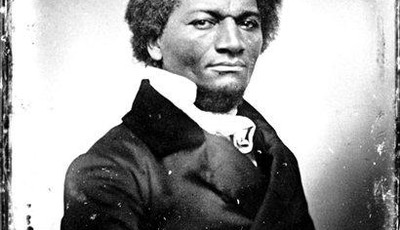
There were a number of martyrs in Roman times named Saint Valentine. Of the one whose feast is celebrated on February 14, nothing at all is known except that he was buried on that day. How he became the patron saint of love nobody really knows.
However, there was a man who is worth commemorating on February 14, the date he chose arbitrarily as his ‘birthday’.
His name was Frederick Douglass.
Nick Rizzuto writes about him at Townhall:
He was a giant of a man both physically and intellectually. He was raised in adverse circumstances that he would eventually rise above. When called upon, he served his country admirably in grave times, and broke racial barriers in this nation like no other man before him had. No, I’m not speaking of Abraham Lincoln, although that description would be equally fitting for him; I speak of the great anti-slavery orator Frederick Douglass.
As it was with most people born into slavery, Douglass did not know the exact date of his birth. He did however adopt Valentine’s Day as his birthday due to the fact that his mother, Harriet Bailey, lovingly referred to him as “her little valentine.” This year will mark the 192nd anniversary of Douglass’ birth.
Like many historical figures, Frederick Douglass’s true character and beliefs have been somewhat obscured, whether due to the fog of time, or to fit modern agendas. While we take for granted today that Douglass’ views on the abolition of slavery and women’s suffrage were just, his view of the US Constitution would be considered by many to be out of the mainstream.
On July 5th of 1852, Douglass, who referred to himself as a “black, dyed in the wool Republican”, addressed the Rochester Ladies Anti-Slavery Society in Rochester, New York. During his passionate speech, Douglass said, “Take the Constitution according to its plain reading. I defy the presentation of a single pro-slavery clause in it.” Douglass continued his Independence Day address by proclaiming that, “Interpreted as it ought to be interpreted, the Constitution is a glorious liberty document.”
Imagine the leap of faith that that statement must have taken for a black man who lived in a time in which members of his family were treated as property to view the Constitution as a beacon of liberty. If the self educated scholar Douglass had stood in front of the crowd and torn the document to shreds, one could scarcely have blamed him. While evident to Douglass over 150 years ago, this trust in the idea of limited government in general, and the protections afforded by the United States Constitution specifically, seems to be difficult for many on the American left to accept even today.
What makes Douglass’s praise for the constitution even more unlikely was that he did so according to its “plain reading”; or in other words, as it had been written. He spoke these words before America fought a Civil War to decide once and for all the issue of slavery and even before a single piece of Civil Rights legislation had passed through congress. Douglass did not complain about the lack of specifics in the constitution that indicated what the government “must do on your behalf”, as then Illinois State Senator Barack Obama famously did in a 2001 interview. Nor did he decry that it was a “charter of negative liberties” which, as President Obama has stated he believes, “represented the bias of the founders.”
Douglass’ words came even before The Constitution came to be viewed by many as a series of court cases and precedents rather than a stand-alone document. For example, his praise did not rest on the decision made in Brown vs. Board of Education which would come over 100 years later. Douglass apparently understood that civil rights would not be the products of court decisions, but that they were intrinsic to the nature of our republican form of government.
Europe betrayed 494
Here is an account of how and why twenty million Muslims were imported into Europe, and to what effect.
The information is condensed from Eurabia: The Euro-Arab Axis by Bat Ye’or. (The wording is largely hers, with some added notes and comments of my own – JB.)
1969 France sells 110 Mirage jets to new Libyan dictator, Muammar Qaddafi. Explores with him the concept of a Euro-Arab dialogue. Becomes in the following years a major supplier of arms to many Arab states.
1973 May: London. Conference of Islamic Cultural Centers. Islamic leaders decide to create, fund and support cultural centres in Europe as ‘a great need was felt [in Europe] for the tenets of Islam’ and such centres would help Muslim communities in Europe play this role [of teaching the tenets of Islam] effectively and fruitfully.’ The Conference also ‘decided to establish the Islamic Council of Europe to serve as an organ of co-ordination among all Islamic institutions and centres.’ It was to ‘propagate the true teachings of Islam throughout Europe.’ Thus there was to be a ‘stepping up of the activities of the Islamic Da’awa [proselytism]’. To this end, an International Islamic News Agency was to be established, also a Jihad Fund open to subscription ‘with no restrictions’.
The ‘rights’ of immigrants to preserve their beliefs, traditions and national cultures were to be guaranteed by the Europeans. Facilities for the teaching of Arabic were to be ‘improved’. The establishment of a Euro-Arab University was proposed (and initial steps to do so were taken in subsequent years including the founding of the Euro-Arab Business Management School in Granada in 1994).
October 16-17: Kuwait. Mortified by the defeat of Egypt, Syria and Jordan in their war against Israel, the Arab oil-producing countries meet and decide to quadruple the price of oil and to reduce their production of crude oil by 5% each month until Israel withdraws from the territories those three countries lost to Israel in 1967 and failed to recover in 1973. Impose an oil embargo on the US, Denmark, the Netherlands as states friendly to Israel. Sheikh Yamani of Saudi Arabia threatens that the oil states could ‘reduce production by 80%’ and asks the West ‘How could you survive with that?’ In response the US stands firm, France and Germany panic.
November 6: Brussels. Meeting of the EEC nine members. Ignoring objections from Washington, the meeting insists on starting an appeasing approach to the Arab oil states. They issue a joint Resolution based on their dependence on Arab oil, in which they pledge themselves to support the Arabs diplomatically in their conflict with Israel. This was sufficient to induce the Arab states to increase oil supplies and ‘open a dialogue’ (as already conceived in discussions between France and Libya). Thus began a Euro-Arab political solidarity pact that was hostile not only to Israel but also to America.
November 26-27: Georges Pompidou, President of France, and Willy Brandt, Chancellor of West Germany meet. Reaffirm intention to ‘engage in a dialogue with the Arabs’.
November 28: Algiers. Sixth Summit of the Arab Conference. Arab heads of state address a Declaration to the EEC, noting with interest ‘the first manifestations of a better understanding of the Arab cause by the states of Western Europe’, and setting out Arab political preconditions for the projected dialogue. The Declaration stresses that the political and economic aspects are interdependent and non-negotiable – ie the supply of oil depends on EEC acceptance of Arab political conditions concerning Israel.
December 15: Copenhagen. An EEC summit, called by President Pompidou of France, considers the planning for co-operation between the EEC countries and the Arab League. Four Arab foreign ministers, delegated by the Algiers Arab summit, are invited to monitor the project. They suggest various strategies in the context of the conditions that the Arab states place on any accord with the EEC.
1974 February 24: Lahore. The Second Islamic Conference, organized by the recently created Organization of the Islamic Conference (OIC) confirms and elaborates the conditions for co-operation with the EEC.
June 10: Bonn. Britain (which had joined the EEC in 1973, as had Ireland and Denmark), had vetoed the Euro-Arab Dialogue in protest against Holland being under an Arab embargo ‘for being pro-Israeli’, but the embargo was lifted against Holland, so now the foreign ministers of the EEC states meet to discuss ‘the Dialogue’. Areas of co-operation between Europe and the Arab states include industry and agriculture, science and technology, finance, education, and ‘civil infrastructure’. The Arab states, in other words, are being promised massive transfers of money and know-how with programmes to industrialise and modernise their countries.
Note: All this was desperately desired by the Arab states, and the provision of it could have been used by Europe as a counter-lever to the oil blackmail which the Arabs had brought to bear on Europe. Furthermore, the Arab oil states needed to sell their oil to Europe, and needed to invest in a thriving European economy. The European governments could have dictated terms. But the EEC, under insistent French leadership, preferred to appease rather than negotiate. The motivation for France was not only commercial. It was a desire to re-acquire a large sphere of influence in the Arab world, in pursuit of an intense ambition to achieve super-power status and so to rival the United States.
July 31: Paris. The first official meeting at ministerial level between the Europeans and the Arabs to discuss the organization of the Dialogue. An institutionalized structure is created to harmonize and unify the trade and co-operation policies of each of the EEC countries with the member states of the Arab League.
The EEC founds The European Parliamentary Association for Euro-Arab Cooperation ‘to improve political, cultural, and economic cooperation between Europe and the Arab world’. Its Executive Committee set to meet regularly every six months. All the political parties and groupings of Europe are members of it. It is to keep in regular contact with European governments, the Presidency of the European Council of Ministers, and the EEC Commission.
September 14-17: Damascus. To meet Arab demands in preparation for the next summit of the Arab Conference, the Association convenes representatives of all the parliamentary parties of the EEC member states except Denmark and resolves, inter alia, to permit the participation of the PLO and its leader, Yasser Arafat, into all negotiations, and to bring pressure to bear on the United States to shift its Middle East policy in favour of the Arabs. Also to permit Arab countries to export millions of their populations into all the EEC countries, along with their culture and their customs.
October: Rabat. The Seventh Summit of the Arab Conference confirms that the indispensable political preconditions for the Euro-Arab Dialogue have been met by the EEC. The Arabs stress that the interdependence of the political and economic aspects of European-Arab cooperation is not negotiable, ie European oil supplies are dependent on European support for Arab political demands.
A permanent Euro-Arab Dialogue (EAD) secretariat of 350 members is created, with its seat in Paris, for the purpose of promoting economic and political cooperation. The EAD is organized into various committees charged with planning ‘joint industrial, commercial, political, scientific, technical, cultural, and social projects’. European members are for the most part persons with vested interests in the Arab and Islamic world, whether commercial or in relation to their academic jobs as Arabists and Islamists.
Note: The EEC had been conceived of as an economic institution, dealing with markets, finance, and trade. The Arab states’ pressure for a unified European policy to meet their political demands were a vital factor in the development of the EEC from an economic to a political union.
1975 June 10: Cairo. First meeting of The Euro-Arab Dialogue. EEC delegates meet with those of 20 Arab states and the PLO. The basis of the agreement with Europe is emphasised: economic deals with Europe in exchange for European alignment with Arab policy on Israel.
With that locked in place, other agreements could follow.
July 24: Rome, and November 27: Abu Dhabi. EAD meetings. Co-operation extends and deepens.
1976 May 18-20: Luxembourg. EAD organization and procedures are defined. ‘The Dialogue’ is composed of three organs:
A General Committee – presidency jointly held by heads of Arab and European delegations. All delegates on both sides are of ministerial and ambassadorial rank. Purpose, to keep the Dialogue on track. (No wavering on Europe’s part from the founding commitments.) Meetings secret. No recorded minutes. Can publish summaries of decisions and issue press releases.
A Working Committee. Made up of business experts, economists, oil specialists along with Arab League and EC representatives. Again, joint Arab League/EC presidency.
A Coordinating Committee. To co-ordinate the work of various working parties set up by the other committees.
Further EAD meetings (several in Brussels, then in Tunis in February 1977) establish the conditions for an intertwining of Arab and European policies: the establishment of a Palestinian state with Yasser Arafat as its leader; a campaign to bring worldwide political and economic pressure on Israel to force its withdrawal to its 1949 armistice border [as a step in a policy of ‘stages’ with the ultimate aim of extinguishing the State of Israel]; an international boycott of Israel and opposition to any separate peace treaties; promotion of Anti-Israel media propaganda.
Note: The Arabs at this point had not got all they wanted from Europe. They had to accept some significant failures – attested to by the fact that Israel continued to exist, which is nothing short of astonishing in the light of the jihad campaign working so persistently and in most respects triumphantly against it – but they contented themselves temporarily with partial success.
Meetings of the EAD committees continue into 1978. Then the Camp David agreement between Egypt and Israel acts as a brake on EAD activity.
1980 The EAD meets again when the Europeans are worried about declining oil production in Iran, and the Arabs want to complain to Europe about the Israeli-Egyptian treaty.
1981 January 25-28: Mecca and Taif. The Third Islamic Summit Conference issues a Declaration of Holy Jihad ‘as the duty of every Muslim, man or woman, ordained by the Shariah and the glorious traditions of Islam; to call upon all Muslims, living inside or outside Islamic countries, to discharge this duty by contributing each according to his capacity in the cause of Allah Almighty, Islamic brotherhood, and righteousness.’
One of the chief aims the declaration specifies is ‘to save Al-Quds’ – ie to take Jerusalem into Arab possession. To this aim, through the EAD, Europe accedes, co-operating with the Arab campaign to isolate and vilify Israel and helping to deliver the United Nations as an instrument of Arab jihadic purpose.
Note: The EC/EU’s moral commitment to connive at the Palestinian jihad compromised the very foundations of freedom and Western culture, and did not make Europe safer.
Europe is also a designated target of jihad. The national governments are not unaware of the threat that hangs over them, and from early on fear has been one of the motivating causes of the European policy of appeasement:-
1998 Damascus: Three years before ‘Islamikazes’ carried out the 9/11 mass murder of Americans in New York, six years before the massacres of commuter-train passengers in Madrid, seven years before the underground and bus bombing atrocities in London, a conference of the Euro-Arab Parliamentary Dialogue is held in Syria, under the auspices of the murderous dictator Hafiz al-Assad. Members of fourteen national European parliaments and the European Parliament attend, also representatives of the European Commission. Arab members of sixteen non-democratic parliaments and representatives of the Arab League bring a heavy threat to bear openly on the Europeans: they stress that ‘peace and stability in Europe’ is ‘closely connected’ to Europe’s compliance with Arab Middle East policy. The official reports of the Dialogue constantly reiterate this point. It could not have been impressed more firmly on European parliamentarians and the EU Commission that jihad could be unleashed against Europe itself if Arab conditions were not met.
Throughout the 1980s and 1990s the EAD continued to serve as a vehicle for policy decided at Islamic Conferences. It was the principle instrument for implementing the resolutions of the Arab conferences. It advanced the Arab mission of implanting millions of Muslims into Europe who come with no intention of integrating into European culture and society, but arrive with the desire and the legal right, granted by the EEC/EU, to impose their own culture upon the host country – a culture fired by a fundamentalist mission of violent jihad.
It facilitated the creation of those fundamentalist trends. It introduced the educational and cultural programs of the European Islamic Centres into European schools – programs enthusiastically accepted and applied by European political leaders, intellectuals, and activists. EAD facilitated the creation of fundamentalist trends.
2000 The European Commission provides funds to revive a dormant organisation called the European Institute for Research on Mediterranean and Euro-Arab Cooperation, known as MEDEA. (The Euro-Arab political partnership was increasingly called ‘Mediterranean’, the Arab states being referred to as ‘the South’ and the EU states as ‘the North’.) MEDEA is now chaired by a Belgian minister for foreign affairs who reorganises MEDEA’s European Parliament section of over 100 members. There are also MEDEA sections in individual national parliaments. Subsequently the organisation issues regular press releases to opinion- makers, intellectuals and pressure groups, and plays a major role in spreading Arab influence in Europe.
2001 September 11: New York and Washington. ‘Islamikaze’ terrorists fly hijacked planes into the World Trade Centre in New York and the Pentagon in Washington, killing close on 3000 people. Another hijacked plane is forced down by its passengers near Shanksville in Pennsylvania. President Bush declares ‘War on Terror’.
October: The US, its military assisted by seven other countries, the UK primarily, also Canada, Australia, New Zealand, France, Germany and Italy, invades Taliban-ruled Afghanistan to overthrow that fundamentalist Islamic government. The Taliban had equipped al-Qaeda, the organization, led by Osama bin Laden, which had despatched the terrorist attackers of America. The Taliban is (temporarily) overthrown.
2002 June 20. Brussels: The Arabs ask for special privileges for Arab immigrants into the EU to put them ‘on an equal basis with Europeans’. The host countries are exhorted to provide Arab immigrants with vocational training, freedom of movement, suitable living conditions, and financial aid if they should choose to return to their homelands.
2003 March 20: The US and Britain invade Iraq to overthrow the dictator Saddam Hussein. Other countries, including Spain, lend various degrees of military assistance. France and Russia emphatically oppose the invasion. Anti-war demonstrations, intensely anti-American, are staged throughout Europe.
In this year the French Institute for International Relations (IFRI) reports to the European Commission that the economic outlook for Europe is gloomy but would be brightened if there were to be increased Arab immigration. In Britain, however, the Home Secretary, David Blunkett, warns that the imposing of mass immigration on a populace that did not want it, threatened the social fabric of Britain because of “the disintegration of community relations and social cohesion”.
December 2-3. Naples: At a Euro-Mediterranean Conference of ministers of foreign affairs, EU officials reaffirm Europe’s ‘solidarity’ with its ‘Mediterranean partners’. At this conference even more foundations, committees and subcommittees are proposed. The European Bank – an institution funded entirely by Europe’s tax-payers – will open a subsidiary to serve Arab (sharia conforming) requirements. The absence of democracy in the Arab states, their economic stagnation, continuing terrorism carried out in many parts of the world in the name of Islam, are not matters on which the Europeans choose to lay stress.
2004 March 11. Madrid: Terrorist bombs are exploded by Muslim residents of Spain on commuter trains. Nearly 200 people killed, nearly 2000 injured. The response of the Spanish electorate a few days later is to vote Prime Minister Jose Maria Aznar, who supported President Bush in his war on Iraq, out of power, and vote in Jose Luis Rodriguez Zapatero who has opposed Spain’s participation in the Iraq war. The change favours the Islamic terrorists. The result amounts to a national capitulation to terrorism.
November 2. Amsterdam: Theo van Gogh, Dutch film maker, is shot, stabbed and has his throat slit by a Dutch-born Muslim. The victim had made a film about the abuse of Muslim women.
In this year Eastern European countries are admitted into the EU. Arab leaders fear that their immigrants will no longer be welcome in Western Europe. They ask for and are granted assurances that Europe’s chief sources of immigration will continue to be ‘above all the Mediterranean Arab countries.’ So EU policy in this regard is (yet again) shaped to conform to Arab demands. It will ‘balance’ its expansion into Eastern Europe with an increase in Arab immigration.
2005 July 7: London. Terrorist bombs explode on three underground trains and a bus in central London. 56 killed, about 700 injured. The killers are identified as British born Muslims.
Violent jihad had been unleashed against Europe from within.
Increasingly the continent is being made to feel the tragic consequences of its policies. In the light of the demographic facts on the ground – a drastic shrinking of indigenous populations and an exponential rise in the numbers of Muslims – it seems it may now be too late for it to save itself.
Jillian Becker February 11, 2010