Keeping the homeland safe 204
This information comes from Dr Terry Kelhawk at PoliticalMavens. A Palestinian passed through Paris on his way from the Middle East – we are not told where to – and this is what happened:
The Arab Muslim screeners [in Paris] found out he was Palestinian, and while the other passengers were being heavily scrutinized, he got the “hail fellow well met” treatment. Smiles and sympathy replaced not only his walking through the metal detector, but exempted his backpack from the indignity of x-ray as well. Good thing he was not in the mood to blow up a plane that day.
That needs to considered along with this report by CNS News (worth reading in full):
Four months after the attempted Christmas Day bombing of Northwest Flight 253 over Detroit and nine years after the Sept. 11, 2001 terrorist attacks, only 14 of the 57 U.S. consulates identified as being at “high risk” for potentially providing visas to terrorists have been furnished with units of the Department of Homeland Security’s Visa Security Program (VSP).
President Barack Obama, meanwhile, is planning to freeze the program’s budget for fiscal 2011.
The VSP, established by the Homeland Security Act of 2002, puts Department of Homeland Security officials in the field at U.S. consulates to vet the backgrounds of people applying for U.S. visas. …
While administration officials have said publicly that five additional VSP units should be in place at high risk consulates by the end of 2011, President Barack Obama’s fiscal Year 2011 budget for DHS–submitted almost two months after the Christmas Day bombing attempt—does not increase funding for the program from its fiscal 2010 level. …
According to a March 8 Congressional Research Service (CRS) report, a lack of funding could hamper expansion of the Visa Security Program to the many high-risk consulates that still do not have a unit. …
President Obama’s proposed freeze on VSP funding and the administration’s slow pace in putting new VSP units in high risk consulates is unacceptable to some congressional Republicans, who have introduced legislation to address these issues.
The Secure Visas Act (HR 4758), introduced in March by Rep. Lamar Smith (R-Tex.), would allocate $60 million to the program for fiscal 2010 and another $60 million for fiscal 2011 for placing VSP units in the 15 “highest risk” consulates beyond the 14 that already have units in place. That bill would approximately double the funding the Obama administration has allocated for the program in fiscal 2010 and fiscal 2011.
“The visa security process is our first line of defense against terrorists and others who wish to do us harm,” Rep. Lamar Smith (R-Texas), the lead sponsor of the Secure Visas Act, told CNSNews.com. “But under President Obama, new Visa Security Units ground to a halt.” …
At the current rate of VSP placement — about five consulates every two years — it would take until 2021 for 75 percent of high-risk consulates to have the program in place. …
“If the Obama administration will not exercise its authority to develop new VSUs (Visa Security Units) at the highest risk posts identified by its own Department of Homeland Security, Congress must step in,” said Smith. …
Smith and Secure Visas Act co-sponsor Sen. John Cornyn (R-Texas) noted that it took 12 months for the DHS to start the process for putting a VSP unit in Yemen, the country where Christmas Day bombing suspect, Umar Farouk Abdulmutallab, was radicalized.
“Department of Homeland Security Secretary Janet Napolitano waited 12 months before even sending a request to the State Department to open a unit in Yemen,” the senators wrote. …
Arizona’s compassionate new law 80
We have poached this letter from Mark Steyn’s website. It was sent to him by Linda Denno, of Sierra Vista, Arizona. We think it raises points that should be taken into account in the arguments raging over illegal immigration, and over the controversial measures Arizona is taking to deal with it.
I live within fifteen miles of the Mexican border, and my back fence runs along a major corridor for illegal immigrants traveling through the desert. We are accustomed to helicopters circling overhead and Border Patrol vehicles constantly patrolling the dirt road behind our house. Our beloved German Shepherd has been poisoned and our property vandalized, although I would not say that we live in fear because we are well armed and take necessary precautions.
But what I really want to mention to you is something I really have not heard in the debate over the consequences of illegal immigration. I believe that any and all measures that truly discourage immigrants from entering this country illegally — as the new Arizona law is supposedly already doing — are salutary because discouraging illegal immigration is the genuinely compassionate approach.
A couple of anecdotes: Last week, Border Patrol agents discovered a large moving truck abandoned in the desert near Douglas, Arizona (the site of the recent rancher’s murder). The truck was padlocked from the outside. When the agents cut off the lock and opened the trailer, they discovered dozens of illegal immigrants inside, abandoned by the coyotes who had obviously been “spooked” and left the people in the back of the truck to whatever fate befell them. It was a warm but not a hot day in the desert, so the illegal immigrants were still alive and in relatively good condition. The situation could have ended very differently, not to say tragically.
Secondly, my family and I were enjoying our breakfast al fresco one morning when two women came to our back fence asking for “agua.” A Border Patrol raid the night before behind our house had picked up 70 or so illegal immigrants. These two young ladies had been abandoned by the coyotes during the raid and had been wandering in the hot desert (wearing all black) for hours. My teenage daughter speaks Spanish and was able to discover that both were from El Salvador, both were the mothers of several young children, and both believed they were almost to Los Angeles (550 miles away). We brought them into our garage, gave them water and food, and called the Border Patrol. My daughter was upset about their situation, and understandably so: They were only a few years older than she was. I explained to her that as long as our government refused to enforce laws against illegal immigration, desperate people from other countries would continue to take great risks for the opportunity to live the American dream. Those people would face incredible dangers, be vulnerable to the worst kinds of thugs, and endure unspeakable hardships — as long as the United States refused to make illegal immigration a crime for which all involved would be swiftly and severely punished. …
I just would like to add a perspective that should be thrown back in the face of the hypocrites who call us racist and mean-spirited. The anecdotes above are representative of incidents that happen in the Arizona desert constantly …
The answer is not to set up “water stations” to prevent illegals from dying in the desert. The answer is to discourage them from entering illegally in the first place. That is the only truly humanitarian, compassionate approach to the plight of illegal aliens.
We heartily agree.
Discrimination and abuse in law enforcement 191
Q: The Obama administration constantly insists that Mexico must help stop illegal migration from its side of the border into the US, doesn’t it?
A: ?
Q: The Mexican government is in any case doing all it can to help, isn’t it?
A: What, with huge amounts of money being sent back to Mexico by illegal Mexican workers in the US? Are you crazy?
Q: But Mexico sets a great example of tolerance and humane treatment of migrants who come illegally into Mexico, doesn’t it?
A: Let’s read what Humberto Fontova writes at Canada Free Press:
Mexican President Felipe Calderon can hardly contain his revulsion and rage against Arizona’s SB 1070. He’s “deeply troubled” reports the Associated Press over a law he denounces as “discriminatory and racist,” not to mention: “a dire threat to the whole Hispanic-American population.”
This new Arizona law, “opens the door to intolerance, hate, discrimination and abuse in law enforcement,” sputters the Mexican President.
Indeed, this “threat to Hispanics” and these “abuses in law enforcement,” have been ongoing for years. The Associated Press carried a story where a Maria Elena Gonzalez, reported how female migrants were “forced to strip by abusive police officers, supposedly to search them, but the purpose is to sexually abuse them.”
Jose Ramos, 18, reported “that extortion by border police occurs at every stop on their migratory route. Until migrants are left penniless and begging for food.”
According to this Associated Press story: “Others said they had seen migrants beaten to death by police, their bodies left near the railway tracks to make it look as if they had fallen from a train. “If you’re carrying any money, they take it from you,” said Carlos Lopez. “Federal, state, local police—all of them shake you down. If you’re on a bus, they pull you off and search your pockets, and if you have any money, they keep it all and say, get out of here.”
All of the above “hate” and “abuses in law enforcement” as reported by the Associated Press, befell Central American migrants who enter Mexico. So perhaps Mexican President Calderon knows what he’s talking about?
But what he’s also talking lately—rather than getting his own house in order—is an economic boycott of Arizona.
“Commercial ties between Mexico and Arizona will be affected by this law,” vowed President Calderon in a speech last week to the Institute for Mexicans Abroad. “We are going to act.”
Fewer US dollars may be remitted to Mexico, it’s true. But will Calderon be able to administer the coup de grace to the ailing US economy? We wait to see.
Scofflaws rule 33
Arizona’s newly passed act enabling the police to enforce the law against illegal immigration has been condemned as ‘misguided’ by the president, and ‘racist’ by Hillary Clinton and a chorus of Democratic politicians.
How much more bizarre a scenario could be imagined than that the head of the executive branch of the federal government, members of his cabinet, and legislators, should object to the law of their country being enforced?
Conservative and atheist Heather Mac Donald , whose opinion is always well-informed and persuasive, writes in City Journal:
Supporters of Arizona’s new law strengthening immigration enforcement in the state should take heart from today’s New York Times editorial blasting it. “Stopping Arizona” contains so many blatant falsehoods that a reader can be fully confident that the law as actually written is a reasonable, lawful response to a pressing problem. Only by distorting the law’s provisions can the Times and the law’s many other critics make it out to be a racist assault on fundamental American rights.
The law, SB 1070, empowers local police officers to check the immigration status of individuals whom they have encountered during a “lawful contact,” if an officer reasonably suspects the person stopped of being in the country illegally, and if an inquiry into the person’s status is “practicable.” The officer may not base his suspicion of illegality “solely [on] race, color or national origin.” (Arizona lawmakers recently amended the law to change the term “lawful contact” to “lawful stop, detention or arrest” and deleted the word “solely” from the phrase regarding race, color, and national origin. The governor is expected to sign the amendments.) The law also requires aliens to carry their immigration documents, mirroring an identical federal requirement. Failure to comply with the federal law on carrying immigration papers becomes a state misdemeanor under the Arizona law.
Good luck finding any of these provisions in the Times’s editorial. Leave aside for the moment the sweeping conclusions with which the Times begins its screed—such gems as the charge that the law “turns all of the state’s Latinos, even legal immigrants and citizens, into criminal suspects” and is an act of “racial separation.” Instead, let’s see how the Times characterizes the specific legislative language, which is presumably the basis for its indictment.
The paper alleges that the “statute requires police officers to stop and question anyone who looks like an illegal immigrant.” False. The law gives an officer the discretion, when practicable, to determine someone’s immigration status only after the officer has otherwise made a lawful stop, detention, or arrest. It does not allow, much less require, fishing expeditions for illegal aliens. But if, say, after having stopped someone for running a red light, an officer discovers that the driver does not have a driver’s license, does not speak English, and has no other government identification on him, the officer may, if practicable, send an inquiry to his dispatcher to check the driver’s status with a federal immigration clearinghouse.
The Times then alleges that the law “empower[s] police officers to stop anyone they choose and demand to see papers.” False again, for the reasons stated above. An officer must have a lawful, independent basis for a stop; he can only ask to see papers if he has “reasonable suspicion” to believe that the person is in the country illegally. “Reasonable suspicion” is a legal concept of long-standing validity, rooted in the Constitution’s prohibition of “unreasonable searches and seizures.” It meaningfully constrains police activity; officers are trained in its contours, which have evolved through common-law precedents, as a matter of course. If the New York Times now thinks that the concept is insufficient as a check on police power, it will have to persuade every court and every law enforcement agency in the country to throw out the phrase—and the Constitution with it—and come up with something that suits the Times’s contempt for police power.
On broader legal issues, the Times is just as misleading. The paper alleges that the “Supreme Court has consistently ruled that states cannot make their own immigration laws.” Actually, the law on preemption is almost impossibly murky. As the Times later notes in its editorial, the Justice Department ruled in 2002, after surveying the relevant Supreme Court and appellate precedents, that “state and local police had ‘inherent authority’ to make immigration arrests.” The paper does not like that conclusion, but it has not been revoked as official legal advice. If states have inherent authority to make immigration arrests, they can certainly do so under a state law that merely tracks the federal law requiring that immigrants carry documentation.
The Times tips its hand at the end of the editorial. It calls for the Obama administration to end a program that trains local law enforcement officials in relevant aspects of immigration law and that deputizes them to act as full-fledged immigration agents. The so-called 287(g) program acts as a “force multiplier,” as the Times points out, adding local resources to immigration law enforcement — just as Arizona’s SB 1070 does. At heart, this force-multiplier effect is what the hysteria over Arizona’s law is all about: SB 1070 ups the chances that an illegal alien will actually be detected and — horror of horrors — deported. The illegal-alien lobby, of which the New York Times is a charter member, does not believe that U.S. immigration laws should be enforced. (The Times’s other contribution today to the prevailing de facto amnesty for illegal aliens was to fail to disclose, in an article about a brutal 2007 schoolyard execution in Newark, that the suspected leader was an illegal alien and member of the predominantly illegal-alien gang Mara Salvatrucha.) Usually unwilling for political reasons to say so explicitly, the lobby comes up with smoke screens—such as the Times’s demagogic charges about SB 1070 as an act of “racial separation”—to divert attention from the underlying issue. Playing the race card is the tactic of those unwilling to make arguments on the merits.
The Arizona law is not about race; it’s not an attack on Latinos or legal immigrants. It’s about one thing and one thing only: making immigration enforcement a reality. …
(See our other posts quoting Heather Mac Donald: ‘Conservative Atheists’, November 18, 2009; Romancing the criminal, January 5, 2010; What the have-nots do not have, January 20, 2010.)
A stink of Fox 238
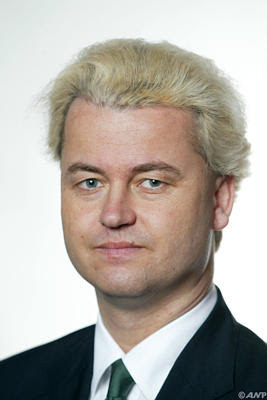
We were lucky to have Fox News to tell us what the left-slanted mainstream media concealed, and to bring us opinion from both the right and the left. Fox News was “fair, balanced, and unafraid” as they claimed and continue to claim.
But is the claim still justified?
Not if we are to judge by their treatment of the Dutch politician Geert Wilders, who is on trial in Holland for expressing an opinion, well supported by facts, on the horrific ideology of Islam.
Here are three articles which together, in sequence, tell the sorry story:
The first is by David Swindle at Front Page:
Fox News’ Special Report with Bret Baier featured a segment tonight [March 8, 2010] on Dutch politician Geert Wilders’s blasphemy trial in the Netherlands.
The segment featured these descriptors of Wilders:
“A man who inspires fierce emotions.”
“Anger on the streets of London. The object of the demonstration was a recent visit by Far-Right Dutch politician Geert Wilders.”
“His Anti-Muslim rhetoric makes him a target of critics.”
“Wilders says Muslim head scarves should be banned, he’s branded the Muslim prophet Muhammed a pedophile and likened the Muslim Koran to Mein Kampf.”
“Far-Right”?
The “Far-Right” label is meant to smear Wilders by trying to associate him with racist European political parties like the BNP [British National Party] that actually warrant the label.
“Anti-Muslim”? Try Anti-Islam. Wilders’ film Fitna exposes how Islam’s first victims are always Muslims. [A link is provided to the film.]
Finally, the report cites three examples of Wilders’ allegedly extreme, “Far-Right” views. While whether head scarves should be banned is a matter of opinion, the last two points — Muhammad’s pedophilia and the Koran’s racist and genocidal injunctions are points of fact.
Later on Special Report they featured a panel in response to the story in which host Jim Angle questioned Charles Krauthammer [whom we greatly respect and admire, and usually, but not this time, agree with – JB], Bill Kristol [whom we respect, and often, but not this time, agree with], and A.B. Stoddard. Krauthammer said that Wilders was wrong about Islam — that the Dutch politician did not see a difference between Islam and Islamism. So those who follow “Islam” ignore passages of the Koran and those who follow “Islamism” actually do what the book tells them to do? Is that right, Charles? Just want to make sure I’m up to speed on the preferred Orwellianisms on the Politically Correct Right.
Stoddard’s comments — she said that Wilders saw no difference between terrorist Muslims and non-violent Muslims — indicate that it’s likely that her first exposure to Wilders was the segment. And Kristol? He dismissed Wilders as a “demagogue.”
This is supposed to be the “conservative” network here and they are unable to present a single panelists who will support Wilders.
The next is by John L. Work, also at Front Page:
Following the gang hatchet job on Dutch Parliamentarian Geert Wilders by two separate FOX News crews a few nights ago, FOX pulled down all the video footage from the internet – like it never happened. Well, it did happen. Jim Angle, Glenn Beck [who we think is doing a great job exposing the Obama administration and is a splendid entertainer] Bill Kristol, Charles Krauthammer and A.B Stoddard all did the dirty work during two different shows. …
First, let’s look at Beck’s six minute interview with Wilders from February of 2009. Beck warmly welcomed Wilders and gave him plenty of air-time. Wilders presented his case for the noble cause of resistance to the growing Islamic repression of free speech in The Netherlands. Beck treated Wilders like the hero he is.
A year later it is impossible to reconcile Beck’s posture and position in 2009 with his attack on Wilders this week – unless one allows for the possibility that Beck is now being influenced by powers above him at FOX News. [A link is provided to Beck’s 2009 interview with Wilders.]
Now for this week’s piece, in which Beck labeled Wilders a fascist [Another link is provided.]:
Let’s analyze the evidence:
Wilders, himself, has not changed since the first Beck interview – not his speech, not his positions, and not his beliefs. What has changed immensely is his stature in The Netherlands. He is much more powerful now than he was when he first appeared on Beck’s show in 2009. In fact, it is entirely within the realm of possibility that Wilders could become Prime Minister.
Now, FOX News is astonishingly trying to destroy Wilders. Ignoramus, demagogue and fascist are pretty nasty labels to lay on anyone. Beck was not recognizable this week from his demeanor and position with Wilders in 2009.
Other than Muslims throughout the world, who would be unhappy with Wilders’ rise to power and prominence in The Netherlands? Who stands to gain from stopping the most prominent and eloquent defender of Western Civilization in Europe? Who stands to gain from having Wilders’ reputation hacked to pieces by a major American news outlet? You can figure this out. [Another link is provided.]
A whole lot has changed at FOX News, folks.
This last link leads to our third source, an article by Diana West:
It was pile-on time at Fox News tonight as Glenn Beck, Charles Krauthammer, a gal whose name I missed [update — A.B. Stoddard] and Bill Kristol all branded Geert Wilders beyond the pale tonight.
Beck classified Geert as a fascist.
Krauthammer said Geert didn’t know the difference between Islam and Islamism — never mind that according to Krauthammer’s idea of Islamic scholarship, neither did Mohammed.
[Stoddard] said she agreed with Imam Krauthammer and added that if people like this (Geert) are elected to lead Holland it will suffer the consequences.
Kristol called Geert a demagogue.
In other words, a stomach-turning display.
Fact is, this anti-Geert pundit solidarity will only delight Newscorp [owners of Fox] stakeholder Saudi Prince Alwaleed bin Talal. That’s because it is Wilders in the Netherlands who stands as the unexpectedly strong spearhead of resistance to the Islamization of Europe and the wider West. As a scion of the most powerful sharia dictatorship in the world, Prince Talal doesn’t like that. How fortunate for him that Fox News doesn’t like it, either.

Europe betrayed 494
Here is an account of how and why twenty million Muslims were imported into Europe, and to what effect.
The information is condensed from Eurabia: The Euro-Arab Axis by Bat Ye’or. (The wording is largely hers, with some added notes and comments of my own – JB.)
1969 France sells 110 Mirage jets to new Libyan dictator, Muammar Qaddafi. Explores with him the concept of a Euro-Arab dialogue. Becomes in the following years a major supplier of arms to many Arab states.
1973 May: London. Conference of Islamic Cultural Centers. Islamic leaders decide to create, fund and support cultural centres in Europe as ‘a great need was felt [in Europe] for the tenets of Islam’ and such centres would help Muslim communities in Europe play this role [of teaching the tenets of Islam] effectively and fruitfully.’ The Conference also ‘decided to establish the Islamic Council of Europe to serve as an organ of co-ordination among all Islamic institutions and centres.’ It was to ‘propagate the true teachings of Islam throughout Europe.’ Thus there was to be a ‘stepping up of the activities of the Islamic Da’awa [proselytism]’. To this end, an International Islamic News Agency was to be established, also a Jihad Fund open to subscription ‘with no restrictions’.
The ‘rights’ of immigrants to preserve their beliefs, traditions and national cultures were to be guaranteed by the Europeans. Facilities for the teaching of Arabic were to be ‘improved’. The establishment of a Euro-Arab University was proposed (and initial steps to do so were taken in subsequent years including the founding of the Euro-Arab Business Management School in Granada in 1994).
October 16-17: Kuwait. Mortified by the defeat of Egypt, Syria and Jordan in their war against Israel, the Arab oil-producing countries meet and decide to quadruple the price of oil and to reduce their production of crude oil by 5% each month until Israel withdraws from the territories those three countries lost to Israel in 1967 and failed to recover in 1973. Impose an oil embargo on the US, Denmark, the Netherlands as states friendly to Israel. Sheikh Yamani of Saudi Arabia threatens that the oil states could ‘reduce production by 80%’ and asks the West ‘How could you survive with that?’ In response the US stands firm, France and Germany panic.
November 6: Brussels. Meeting of the EEC nine members. Ignoring objections from Washington, the meeting insists on starting an appeasing approach to the Arab oil states. They issue a joint Resolution based on their dependence on Arab oil, in which they pledge themselves to support the Arabs diplomatically in their conflict with Israel. This was sufficient to induce the Arab states to increase oil supplies and ‘open a dialogue’ (as already conceived in discussions between France and Libya). Thus began a Euro-Arab political solidarity pact that was hostile not only to Israel but also to America.
November 26-27: Georges Pompidou, President of France, and Willy Brandt, Chancellor of West Germany meet. Reaffirm intention to ‘engage in a dialogue with the Arabs’.
November 28: Algiers. Sixth Summit of the Arab Conference. Arab heads of state address a Declaration to the EEC, noting with interest ‘the first manifestations of a better understanding of the Arab cause by the states of Western Europe’, and setting out Arab political preconditions for the projected dialogue. The Declaration stresses that the political and economic aspects are interdependent and non-negotiable – ie the supply of oil depends on EEC acceptance of Arab political conditions concerning Israel.
December 15: Copenhagen. An EEC summit, called by President Pompidou of France, considers the planning for co-operation between the EEC countries and the Arab League. Four Arab foreign ministers, delegated by the Algiers Arab summit, are invited to monitor the project. They suggest various strategies in the context of the conditions that the Arab states place on any accord with the EEC.
1974 February 24: Lahore. The Second Islamic Conference, organized by the recently created Organization of the Islamic Conference (OIC) confirms and elaborates the conditions for co-operation with the EEC.
June 10: Bonn. Britain (which had joined the EEC in 1973, as had Ireland and Denmark), had vetoed the Euro-Arab Dialogue in protest against Holland being under an Arab embargo ‘for being pro-Israeli’, but the embargo was lifted against Holland, so now the foreign ministers of the EEC states meet to discuss ‘the Dialogue’. Areas of co-operation between Europe and the Arab states include industry and agriculture, science and technology, finance, education, and ‘civil infrastructure’. The Arab states, in other words, are being promised massive transfers of money and know-how with programmes to industrialise and modernise their countries.
Note: All this was desperately desired by the Arab states, and the provision of it could have been used by Europe as a counter-lever to the oil blackmail which the Arabs had brought to bear on Europe. Furthermore, the Arab oil states needed to sell their oil to Europe, and needed to invest in a thriving European economy. The European governments could have dictated terms. But the EEC, under insistent French leadership, preferred to appease rather than negotiate. The motivation for France was not only commercial. It was a desire to re-acquire a large sphere of influence in the Arab world, in pursuit of an intense ambition to achieve super-power status and so to rival the United States.
July 31: Paris. The first official meeting at ministerial level between the Europeans and the Arabs to discuss the organization of the Dialogue. An institutionalized structure is created to harmonize and unify the trade and co-operation policies of each of the EEC countries with the member states of the Arab League.
The EEC founds The European Parliamentary Association for Euro-Arab Cooperation ‘to improve political, cultural, and economic cooperation between Europe and the Arab world’. Its Executive Committee set to meet regularly every six months. All the political parties and groupings of Europe are members of it. It is to keep in regular contact with European governments, the Presidency of the European Council of Ministers, and the EEC Commission.
September 14-17: Damascus. To meet Arab demands in preparation for the next summit of the Arab Conference, the Association convenes representatives of all the parliamentary parties of the EEC member states except Denmark and resolves, inter alia, to permit the participation of the PLO and its leader, Yasser Arafat, into all negotiations, and to bring pressure to bear on the United States to shift its Middle East policy in favour of the Arabs. Also to permit Arab countries to export millions of their populations into all the EEC countries, along with their culture and their customs.
October: Rabat. The Seventh Summit of the Arab Conference confirms that the indispensable political preconditions for the Euro-Arab Dialogue have been met by the EEC. The Arabs stress that the interdependence of the political and economic aspects of European-Arab cooperation is not negotiable, ie European oil supplies are dependent on European support for Arab political demands.
A permanent Euro-Arab Dialogue (EAD) secretariat of 350 members is created, with its seat in Paris, for the purpose of promoting economic and political cooperation. The EAD is organized into various committees charged with planning ‘joint industrial, commercial, political, scientific, technical, cultural, and social projects’. European members are for the most part persons with vested interests in the Arab and Islamic world, whether commercial or in relation to their academic jobs as Arabists and Islamists.
Note: The EEC had been conceived of as an economic institution, dealing with markets, finance, and trade. The Arab states’ pressure for a unified European policy to meet their political demands were a vital factor in the development of the EEC from an economic to a political union.
1975 June 10: Cairo. First meeting of The Euro-Arab Dialogue. EEC delegates meet with those of 20 Arab states and the PLO. The basis of the agreement with Europe is emphasised: economic deals with Europe in exchange for European alignment with Arab policy on Israel.
With that locked in place, other agreements could follow.
July 24: Rome, and November 27: Abu Dhabi. EAD meetings. Co-operation extends and deepens.
1976 May 18-20: Luxembourg. EAD organization and procedures are defined. ‘The Dialogue’ is composed of three organs:
A General Committee – presidency jointly held by heads of Arab and European delegations. All delegates on both sides are of ministerial and ambassadorial rank. Purpose, to keep the Dialogue on track. (No wavering on Europe’s part from the founding commitments.) Meetings secret. No recorded minutes. Can publish summaries of decisions and issue press releases.
A Working Committee. Made up of business experts, economists, oil specialists along with Arab League and EC representatives. Again, joint Arab League/EC presidency.
A Coordinating Committee. To co-ordinate the work of various working parties set up by the other committees.
Further EAD meetings (several in Brussels, then in Tunis in February 1977) establish the conditions for an intertwining of Arab and European policies: the establishment of a Palestinian state with Yasser Arafat as its leader; a campaign to bring worldwide political and economic pressure on Israel to force its withdrawal to its 1949 armistice border [as a step in a policy of ‘stages’ with the ultimate aim of extinguishing the State of Israel]; an international boycott of Israel and opposition to any separate peace treaties; promotion of Anti-Israel media propaganda.
Note: The Arabs at this point had not got all they wanted from Europe. They had to accept some significant failures – attested to by the fact that Israel continued to exist, which is nothing short of astonishing in the light of the jihad campaign working so persistently and in most respects triumphantly against it – but they contented themselves temporarily with partial success.
Meetings of the EAD committees continue into 1978. Then the Camp David agreement between Egypt and Israel acts as a brake on EAD activity.
1980 The EAD meets again when the Europeans are worried about declining oil production in Iran, and the Arabs want to complain to Europe about the Israeli-Egyptian treaty.
1981 January 25-28: Mecca and Taif. The Third Islamic Summit Conference issues a Declaration of Holy Jihad ‘as the duty of every Muslim, man or woman, ordained by the Shariah and the glorious traditions of Islam; to call upon all Muslims, living inside or outside Islamic countries, to discharge this duty by contributing each according to his capacity in the cause of Allah Almighty, Islamic brotherhood, and righteousness.’
One of the chief aims the declaration specifies is ‘to save Al-Quds’ – ie to take Jerusalem into Arab possession. To this aim, through the EAD, Europe accedes, co-operating with the Arab campaign to isolate and vilify Israel and helping to deliver the United Nations as an instrument of Arab jihadic purpose.
Note: The EC/EU’s moral commitment to connive at the Palestinian jihad compromised the very foundations of freedom and Western culture, and did not make Europe safer.
Europe is also a designated target of jihad. The national governments are not unaware of the threat that hangs over them, and from early on fear has been one of the motivating causes of the European policy of appeasement:-
1998 Damascus: Three years before ‘Islamikazes’ carried out the 9/11 mass murder of Americans in New York, six years before the massacres of commuter-train passengers in Madrid, seven years before the underground and bus bombing atrocities in London, a conference of the Euro-Arab Parliamentary Dialogue is held in Syria, under the auspices of the murderous dictator Hafiz al-Assad. Members of fourteen national European parliaments and the European Parliament attend, also representatives of the European Commission. Arab members of sixteen non-democratic parliaments and representatives of the Arab League bring a heavy threat to bear openly on the Europeans: they stress that ‘peace and stability in Europe’ is ‘closely connected’ to Europe’s compliance with Arab Middle East policy. The official reports of the Dialogue constantly reiterate this point. It could not have been impressed more firmly on European parliamentarians and the EU Commission that jihad could be unleashed against Europe itself if Arab conditions were not met.
Throughout the 1980s and 1990s the EAD continued to serve as a vehicle for policy decided at Islamic Conferences. It was the principle instrument for implementing the resolutions of the Arab conferences. It advanced the Arab mission of implanting millions of Muslims into Europe who come with no intention of integrating into European culture and society, but arrive with the desire and the legal right, granted by the EEC/EU, to impose their own culture upon the host country – a culture fired by a fundamentalist mission of violent jihad.
It facilitated the creation of those fundamentalist trends. It introduced the educational and cultural programs of the European Islamic Centres into European schools – programs enthusiastically accepted and applied by European political leaders, intellectuals, and activists. EAD facilitated the creation of fundamentalist trends.
2000 The European Commission provides funds to revive a dormant organisation called the European Institute for Research on Mediterranean and Euro-Arab Cooperation, known as MEDEA. (The Euro-Arab political partnership was increasingly called ‘Mediterranean’, the Arab states being referred to as ‘the South’ and the EU states as ‘the North’.) MEDEA is now chaired by a Belgian minister for foreign affairs who reorganises MEDEA’s European Parliament section of over 100 members. There are also MEDEA sections in individual national parliaments. Subsequently the organisation issues regular press releases to opinion- makers, intellectuals and pressure groups, and plays a major role in spreading Arab influence in Europe.
2001 September 11: New York and Washington. ‘Islamikaze’ terrorists fly hijacked planes into the World Trade Centre in New York and the Pentagon in Washington, killing close on 3000 people. Another hijacked plane is forced down by its passengers near Shanksville in Pennsylvania. President Bush declares ‘War on Terror’.
October: The US, its military assisted by seven other countries, the UK primarily, also Canada, Australia, New Zealand, France, Germany and Italy, invades Taliban-ruled Afghanistan to overthrow that fundamentalist Islamic government. The Taliban had equipped al-Qaeda, the organization, led by Osama bin Laden, which had despatched the terrorist attackers of America. The Taliban is (temporarily) overthrown.
2002 June 20. Brussels: The Arabs ask for special privileges for Arab immigrants into the EU to put them ‘on an equal basis with Europeans’. The host countries are exhorted to provide Arab immigrants with vocational training, freedom of movement, suitable living conditions, and financial aid if they should choose to return to their homelands.
2003 March 20: The US and Britain invade Iraq to overthrow the dictator Saddam Hussein. Other countries, including Spain, lend various degrees of military assistance. France and Russia emphatically oppose the invasion. Anti-war demonstrations, intensely anti-American, are staged throughout Europe.
In this year the French Institute for International Relations (IFRI) reports to the European Commission that the economic outlook for Europe is gloomy but would be brightened if there were to be increased Arab immigration. In Britain, however, the Home Secretary, David Blunkett, warns that the imposing of mass immigration on a populace that did not want it, threatened the social fabric of Britain because of “the disintegration of community relations and social cohesion”.
December 2-3. Naples: At a Euro-Mediterranean Conference of ministers of foreign affairs, EU officials reaffirm Europe’s ‘solidarity’ with its ‘Mediterranean partners’. At this conference even more foundations, committees and subcommittees are proposed. The European Bank – an institution funded entirely by Europe’s tax-payers – will open a subsidiary to serve Arab (sharia conforming) requirements. The absence of democracy in the Arab states, their economic stagnation, continuing terrorism carried out in many parts of the world in the name of Islam, are not matters on which the Europeans choose to lay stress.
2004 March 11. Madrid: Terrorist bombs are exploded by Muslim residents of Spain on commuter trains. Nearly 200 people killed, nearly 2000 injured. The response of the Spanish electorate a few days later is to vote Prime Minister Jose Maria Aznar, who supported President Bush in his war on Iraq, out of power, and vote in Jose Luis Rodriguez Zapatero who has opposed Spain’s participation in the Iraq war. The change favours the Islamic terrorists. The result amounts to a national capitulation to terrorism.
November 2. Amsterdam: Theo van Gogh, Dutch film maker, is shot, stabbed and has his throat slit by a Dutch-born Muslim. The victim had made a film about the abuse of Muslim women.
In this year Eastern European countries are admitted into the EU. Arab leaders fear that their immigrants will no longer be welcome in Western Europe. They ask for and are granted assurances that Europe’s chief sources of immigration will continue to be ‘above all the Mediterranean Arab countries.’ So EU policy in this regard is (yet again) shaped to conform to Arab demands. It will ‘balance’ its expansion into Eastern Europe with an increase in Arab immigration.
2005 July 7: London. Terrorist bombs explode on three underground trains and a bus in central London. 56 killed, about 700 injured. The killers are identified as British born Muslims.
Violent jihad had been unleashed against Europe from within.
Increasingly the continent is being made to feel the tragic consequences of its policies. In the light of the demographic facts on the ground – a drastic shrinking of indigenous populations and an exponential rise in the numbers of Muslims – it seems it may now be too late for it to save itself.
Jillian Becker February 11, 2010
Britain betrayed 96
Melanie Phillips reveals in her column in the Spectator that Britain’s leftist Labour government plotted to bring huge numbers of Muslim immigrants into the country in order to transform its ethnic composition.
Here is what she writes:
Last October, I wrote about how Andrew Neather, a former speechwriter for various Labour Cabinet ministers, had blurted out the fact that the Labour government had engaged on a covert act of national sabotage by loosening immigration controls in order to change the ethnic makeup of the country and rub the right’s nose in diversity and render their arguments out of date. Neather subsequently tried to deny that this is what he had said, claiming he had been misrepresented by ‘excitable right-wing newspaper columnists’ by presenting his views in such a way that they were ‘twisted out of all recognition…into being a ‘plot’ to make Britain multicultural. There was no plot.’
Well, now we know there was indeed precisely such a plot. Neather had originally written that drafts of a government policy document were handed out in summer 2000 only with extreme reluctance: there was a paranoia about it reaching the media. Eventually published in January 2001, the innocuously labelled ‘RDS Occasional Paper no. 67’, ‘Migration: an economic and social analysis’ focused heavily on the labour market case. But the earlier drafts I saw also included a driving political purpose: that mass immigration was the way that the Government was going to make the UK truly multicultural.
The pressure group Migrationwatch has now obtained an early draft of that policy document. The chairman of Migrationwatch, Sir Andrew Green, writes in the Daily Mail, which carried the story, that this document shows there was indeed a conspiracy to change the make-up of the country. … The social objective of greatly increased diversity was entirely suppressed for fear of public reaction – especially from the white working class. These are the very people who are now paying the price for a decade of Labour deception.
A covert policy to subvert the makeup of the country and change its national identity, an abuse of democracy, a stupendous swindle of the British people — more, an act of collective treachery to the nation: an enormous story, you might think? You would be wrong. Other than in the Daily Mail, I cannot find any reference to this anywhere else. I wonder why.
While we fully accept and agree that the Labour Party dreamt of turning Britain into a multicultural utopia and took active steps to realize their terrible dream, we will follow this post with another (see above) to show that such a plot was hatched and implemented by all the West European states, under both leftist and conservative governments, in compliance with the demands of the Arab states.
A change in the British political climate? 330
It looks very much as if the Conservative Party (the Tories) will be returned to power in this year’s general election under the leadership of David Cameron.
It will not be a big change. Such differences as there are between Cameron’s Conservatives and Brown’s (or Blair’s) New Labour socialists are small and few. The Conservative Party of today bears little resemblance to that of Winston Churchill and Margaret Thatcher.
Our British editor, Sam Westrop, has posted two articles in which he expresses his disappointment with the character and behavior of several people who may well be future leaders of the Conservative Party, not this year but in a few years from now.
While this is chiefly of interest to our British readers, it does give Americans a glimpse into what is happening in the political arena over there.
The only Party which could make a difference if it came to power is the United Kingdom Independence Party (UKIP), which wants above all to detach Britain from the undemocratic, politically-correct, incorrigibly collectivist European Union (EU), governed by ukase from Brussels. But although UKIP might win some seats in Parliament, it cannot hope to become a governing majority.
The greatest threat to the nation is Islamization, but no political party is willing to tackle it, or even talk about it above a low murmur, except the British National Party (BNP), which is neo-Nazi (and not so very neo). The refusal of both the major parties, the Conservatives and New Labour, to formulate policies that might deal effectively with it, is driving many voters into the arms of the BNP.
The result is highly likely to be civil strife, violent and bloody.
Policy that passes understanding 18
We invite our readers to ponder this information:
From CNS News:
The State Department has awarded 1,011 special “diversity visas” allowing Yemeni nationals to immigrate to the United States since 2000, the year 17 U.S. sailors were killed when the USS Cole was attacked by terrorists in the Yemeni port of Aden.
The “diversity visas” are designed to encourage immigration from countries that do not otherwise send significant numbers of immigrants to the United States.
The State Department roster of all countries whose nationals have received “diversity visas” to immigrate to the United States in 2010, for example, shows that 2 of these immigrants will be from Luxembourg, 3 from the Solomon Islands, 4 from French Guiana, 5 from Reunion, 6 from Cape Verde, 7 from Malta, 8 from Guinea-Bissau, 9 from Comoros, 10 from Suriname–and 72 from Yemen. Nationals of the four states listed by the State Department as state sponsors of terrorism–Cuba, Iran, Sudan, and Syria–also received “diversity visas” from the State Department to immigrate to the United States in 2010. These include 98 from Syria, 298 from Cuba, 1,084 from Sudan, and 2,773 from Iran.
That the U.S. would encourage immigration from Yemen during the past decade is of interest because of the terrorist problem in that country.
Of interest? Or is it, maybe, scandalous?
Yemen has long been a focus of U.S. security concerns because of terrorist activities there, including not only the 2000 bombing of the U.S.S. Cole but also a 2008 bombing attack on the U.S. embassy. Recently, the concerns about terrorism eminating from Yemen has intensified because Umar Farouk Abdulmutallab, the Nigerian terrorist who attempted to detonate explosive underwear on a Delta Airlines flight from Amsterdam to Detroit on Christmas Day, reportedly joined an al Qaeda affiliate in Yemen and was groomed there for his would-be suicide attack.
In his Saturday radio address, President Obama himself specifically pointed to Yemen as the country of origin from Abdulmuttalab’s terrorist plot, and on Sunday the State Department closed the U.S. embassy in the Yemeni capital of Sanaa for fear of a terrorist attack. …
Winning applicants are selected at random by computer and sent a notification letter. They are given an interview date at the U.S. embassy or consulate in their country, and, if they pass the interview, are allowed to enter the United States as legal permanent residents. Examples of jobs that applicants can use in lieu of a high school diploma to qualify for the diversity visa lottery range from physicist and surgeon to librarian, park ranger, and choreographer.
What Americans aren’t prepared to risk to gain a few more choreographers isn’t worth mentioning.