Adam Smith, The Wealth of Nations, and the system of natural liberty 370

Today, June 5, 2023, is the 300th birthday of Adam Smith.
He is one of the greatest figures of the Enlightenment. As the founder of free-market capitalism he did more for the prosperity of humankind than anyone else in history.
In 1776 he published his famous book, An Enquiry into the Nature and Causes of the Wealth of Nations. It taught that when people are free to pursue their own ends (under the rule of law), they and their society will prosper.
His name stands forever for Liberty and Prosperity, the two greatest aids to the pursuit of happiness.
What a year 1776 was for Liberty! Adam Smith’s book taught the benefits of it for the thriving of nations and individuals, and the American Declaration of Independence established it as the political condition of a new nation coming into being – a nation that was to prove him right.
Economics professor Mark Skousen writes at the New York Post:
Adam Smith (1723-1790) put together the classical model of economics, consisting of free trade, limited government, the virtue of thrift, balanced budgets and sound money.
Smith called it “the system of natural liberty”.
He made an outlandish prediction in his famous book The Wealth of Nations, declaring in 1776 that his model would result in “universal opulence which extends to the lowest ranks of the people”.
It was a tall order.
Indeed, at that time life was “nasty, brutish and short” for most people, to quote Thomas Hobbes. There was very little progress.
But as the world gradually adopted Adam Smith’s model of free trade, low taxes, deregulation, patent law and sound money (supply-side economics), we witnessed the Industrial Revolution in the West, then in the East, and a 100-fold increase in our standard of living.
Adam Smith’s incredible forecast had come true.
The outcome was a hat trick: maximum liberty, individual improvement and public benefit, all at the same time.
So, how much of the Adam Smith model still exists today?
At the top of the list, free trade and globalization have been a big success. The Soviet central-planning model has been abandoned.
Capitalism delivers the quantity, quality and variety of goods and services that the centrally planned economy never could.
The Economic Freedom Index — based on the Smithian measures of laissez faire, balanced budgets, sound money, free trade and rule of law — shows a marked increase from the mid-1970s to the early 2000s.
However, for most of the new century, the Adam Smith model has come under attack by Keynesians, Marxists and interventionists who want a return to top-down policies of authoritarian government, deficit spending, tax hikes, fair trade and over-regulation, all in the name of fairness, equity and saving the planet.
If Adam Smith were alive today, he’d be appalled by the never-ending federal deficits and out-of-control national debt.
He would not approve the overgrown welfare state and military-industrial complex.
He’d be shocked to see the US tax code at over 7,000 pages, and the federal tax regulations exceeding 75,000 pages.
The bloated bureaucracy would be a reminder of the mercantilist policies of his age.
Perhaps there’s a white knight out there coming to put America back on a sound fiscal and monetary basis, but I fear Humpty Dumpty has fallen and can’t be put together again.
I don’t see America becoming another Venezuela, but neither do I see it as another Singapore.
It’s easy to become pessimistic. But perhaps we can learn something from Smith, the ultimate optimist.
Nearly 250 years ago, he wrote, “The uniform, constant, and uninterrupted effort of every man to better his condition . . . is frequently powerful enough to maintain the natural progress of things toward improvement, in spite both of the extravagance of government, and of the greatest errors of administration.”
This well-known and much quoted passage from The Wealth of Nations is a beautifully phrased explanation and defense of a free market economy:
It is not from the benevolence of the butcher, the brewer, or the baker, that we expect our dinner, but from their regard to their own interest. We address ourselves, not to their humanity but to their self-love, and never talk to them of our own necessities but of their advantages.
Enlightened self-interest, not philanthropy, not altruism, not the impossible agenda of trying to love our neighbors as ourselves, is the key not only to each our own benefit, but inevitably also to the benefit of our society, our nation, and potentially our world.
Provide something – goods or services – that others want and will pay for, and the result is personal and general prosperity.
An “invisible hand” – as Adam Smith wrote – works the trick.
The day of his birth was a great day for mankind.
We celebrate it.
Why is America inexorably becoming a socialist country? 0
In an article at American Greatness titled Wall Street Will Die, Theodore R. Malloch and Nicholas Capaldi write:
Something was radically different about the stock market in 2022, and it was not simply that it was a massively down year. A more profound change has occurred. …
The entire economic system is focused on growth, and therefore is designed to bring together creative people who lack resources with people who have resources. This is the genius of the U.S. market economy.
Here is how the stock market used to work. It goes up and down but over time it always has gone up—it must go up, long term, or the whole system collapses. The way to prosperity is to buy and hold a diverse portfolio of value stocks. Trying to “read” the market short term is a risky business. … Buying and holding in a patient fashion over the long term has always been the way to prosperity.
As Friedrich Hayek explained long ago, the market economy is not a mechanical system that can be predicted. But you can bet that over time the market will go up because the entire economy is geared for growth. This means some general strategies will work well in the long term.
Most investors rely on wealth professionals and financial advisors. The professionals do not and cannot know which individual stocks will succeed. What they do know is how to read the tea leaves—charts, graphs, comparisons to earlier analogous situations, interviews with CEOs, studies of foreign governments and exchange rates, company ratings and valuations. This is old-fashioned inductive reasoning. Mostly they play follow-the-leader or follow-the-rising-star. Remember the number of salespeople on Wall Street far outnumbers the number of researchers. Following the stock market publications, like nearly all forms of journalism, has become a form of entertainment. Just think of Mad Jim Cramer. As long as we believe that the market, in general, will go up, the fun will last.
A second way of earning money is to sell short (culturally sometimes considered anti-American). Selling short still requires that somebody has to buy—somebody who still believes that the market is eventually going to go up. In bad times, hedge funds could manipulate the market by driving it up one day (we have been conditioned for optimism) and then selling it the next. This works as long as the public in general believes that the market will go up over time. No matter how bad things get, some hedge funds will thrive, will be in the news, and therefore contribute to the myth that there are experts who really know how to win and play the volatility.
When Republicans control the government, certain industries are favored because those industries support Republican candidates and policies. Favoring certain industries is compatible with and generally requires a healthy economy—otherwise the favored industries cannot sell their products or services.
When traditional Democrats controlled the government, a different set of industries was favored for the same kinds of reasons and with the same assumptions—namely, a robust economy helps favored economic interests, including labor. The political parties before now did not do much damage—what they did was skim the cream for their more influential constituents. There have been many years when having a Democrat in the White House was better for the stock market or for certain stocks.
In both cases, members of the government have inside information about how government regulation will create winners and losers. From time to time, parties will make mistakes (remember, nobody can really predict) and be voted out of office. Not to worry. The other party will eventually be in the same position, and each party gets another bite of the apple ad infinitum.
However, 2022 was a real disaster for the stock market. U.S. stocks had their worst year since 2008 (the final year of George W. Bush’s presidency).
The Dow Jones Industrial Average started at 36,585 and ended at 33,147. The S&P 500 started at 4,797 and ended at 3,840. The NASDAQ started at 15,832 and ended at 10,466.
The declines were 8.6 percent, 19 percent, and 33 percent respectively. There was no point in trying to buy on the dip because the dip had no clear bottom.
You see the overall context. What is different now? Well, the present Democratic Party is not interested primarily in skimming the cream. They want to kill and eat the cow, redistributing the scraps.
What market predictors sometimes forget is that the economic realm and the social realm are interconnected. They influence each other. In Joseph Schumpeter’s famous words, economic growth is a form of “creative destruction.” Economic growth or progress is accompanied not only by changes in economic institutions but by social change as well. Some of the latter are easily perceived as causes of social dislocation.
Republicans have been focused primarily on growth (liberty); Democrats, meanwhile, have focused on the (mal)distribution of wealth. There has always been a conflict between rival elites for the leadership of America: entrepreneurs (business leaders) versus professional politicians and bureaucrats and their academic allies who favor the therapeutic state.
What has changed is that Democrats are now prepared to sacrifice growth in favor of distribution (or what they call equality).
Actually, they prefer to use the term “equity”, by which they mean “equality of outcome”, ie. everyone being as poor as everyone else. Except themselves. They seem to believe that their own wealth will be unaffected, undiminished.
What the Democrats needed to be able to demand fundamental redistribution was the perception of a social problem so grave that it demanded total and permanent political control. COVID was the warm-up, and here we saw blue states sacrifice economic growth for the (mis)perception that mandatory masks and vaccines could overcome all viruses.
The present alleged permanent and overriding crisis is the environment (global warming, climate change, or whatever expression is popular this week). Survival of the human race does not depend upon or require infinite long-term growth according to this view. More to the point, survival may be incompatible with growth.
[Read or] reread The Limits to Growth, published in 1971 by the Club of Rome and based on a faulty MIT model, to review the argument. Many have been personally reassured by the current Jesuit Pope, as well as the autistic Swedish girl, Greta Thunberg, that it is not possible for the whole world to enjoy the lifestyle of the American middle class and that this standard must end.
The trick for the Democrats was to manufacture a crisis that requires or dictates permanent government intervention in the economy. Democrats have figured out how to win elections through mail-in ballots by registering, harvesting, and assisting hordes of people who never used to vote. The current base of the party consists of people who are the least likely to be invested in the stock market (African Americans, Hispanics, young people, single moms, and the poor). The worse the economy becomes, the more we seem to require a quick fix from government intervention (additional indexed benefits). Lack of growth will drive more people into the lower classes, and they, in turn, will vote routinely for Democrats.
Immigration is the icing on the cake. We can redefine “growth” so that there is always some form of (Orwellian) “growth.” Why not—we do this with everything else. Remember, Franklin Roosevelt was elected three times over 12 years without getting us out of the Great Depression before World War II saved his administration and reputation.
In an emergency, there is always the possibility of raising the national debt (the invisible form of taxation). We can always raise the national debt; Congress does it regularly. It stands at $31.4 trillion and is growing each year. We can always count on other countries to play follow the leader. We do not have to worry too much about the debt going up in the long term because the politicians of both parties who favored and voted for it will, by that time, be dead, even if the interest on the debt is itself a killer. Having a credit card without repayment is a convenient government course of action.
Welcome to the new normal.
Mind you, this is not just a temporary limit on economic growth. It is the end of the dream—and, as a consequence, the end of the stock market itself. Why invest if there is no chance to profit and see your investment grow? Wall Street does not want to admit it, but in a thoroughly socialist economy, there is no need or reason for stocks. Over time companies will cease to exist, the market will be dictated, and the state, through its regulatory bureaucracies, will control everything.
But why are the Lords of Commerce and Industry allowing this to happen? And not just allowing it, but promoting it with passionate enthusiasm?
Is it because they expect to be the government?
If not that, then what? How do they explain it to themselves?
A great hunger coming 111
Googled information:
David Beasley, head of the [useless] U.N. World Food Program, said its latest analysis shows that “a record 345 million acutely hungry people are marching to the brink of starvation” — a 25% increase from 276 million at the start of 2022 before Russia invaded Ukraine on 24 Feb. 2022. (Jul 7, 2022)
And –
What percentage of the world [population] is starving in 2022?
10%
Up to 811 million people — about 10% of the world’s population — regularly go to bed hungry. The war in Ukraine is likely to make conditions worse in 2022, as conflict restricts global food supplies, drives up prices, and threatens the world’s most vulnerable people and countries. (Jul 6, 2022)
And yet –
The authoritarian Woke, the Great Resetters, in the name of “saving the planet”, are ordering the decrease of food production.
John Hinderaker writes at PowerLine:
How many people have died, or will die, as a result of the Left’s “green” fantasies? To begin with, who has taken responsibility for the hundreds of thousands–maybe millions–of Africans who have died because of the Left’s insane banning of DDT? No one, of course. Will there ever be an accounting?
Currently, the war between Russia and Ukraine dominates the headlines. We all know that global petroleum supplies have been disrupted by the war, but perhaps more significant is the war’s impact on agriculture. Ukraine and Russia are two of the top grain-exporting countries in the world. Ukraine has been selling grain to the West since ancient times. With those supplies disrupted, a global food shortage impends, and many are predicting that populations in some vulnerable areas that can’t produce enough food for themselves will starve.
So where are the environmentalists in all this? They are doing their best to reduce agricultural output. In Sri Lanka, the government mandated organic farming, with the result that yields declined catastrophically, prices skyrocketed, and, no doubt, many died.
In the U.K., carbon offset schemes are causing hedge funds to buy up farm land and turn it to a less productive use:
A growing number of farms in Wales are being bought by companies to generate carbon credits.
***
The Times revealed in February that a tenant farmer with a young family had been prevented from achieving his dream of owning his own sheep farm when he was gazumped by a company planning to plant trees and sell carbon credits. Ian O’Connor, 36, had had an offer accepted for Frongoch, a 270-acre farm in Cwrt-y-Cadno, Carmarthenshire. Two weeks later the estate agent told him the Foresight Group, a private equity company incorporated in Guernsey, had offered 10 per cent more.
***
Foresight has bought six farms in Wales and estate agents acting for similar companies have been cold-calling Welsh farmers to ask if they want to sell.
Trees are great, but what is happening in the U.K. has nothing to do with either free markets or national interest. The exorbitant demand for carbon credits is government-created as a result of global warming hysteria, and reduced food production is collateral damage.
How about the U.S.? Our farmers produce more food than anyone. But here, too, environmentalist fantasies are reducing food production. Countless acres of productive farm land are being taken over for wind and solar installations. Wisconsin Congressman Tom Tiffany and my colleague Isaac Orr collaborated on this piece in the Washington Examiner. It advocates for Tiffany’s proposed FARM Act:
By strangling U.S. energy producers, the White House has fueled skyrocketing oil prices and enriched Russia’s rulers. An added consequence: Americans are now grappling with the highest gas prices ever recorded. And the pain doesn’t stop at the pump. Food prices, in particular wheat, have soared to record-breaking levels as well.
That’s why our response to Moscow’s aggression must be to maximize our ability to produce the energy and food the world desperately needs right here at home. That starts with preserving farmland for future generations.
Thanks to the dizzying array of renewable energy carve-outs that litter our tax code, taxpayers are forced to underwrite generous “green energy” giveaways, allowing power companies to effectively tap the public treasury to subsidize unreliable wind and solar farms. As a result, prime agricultural land is often taken out of production, posing a long-term threat to America’s ability to feed the world.
Industrial solar and wind facilities are land-hungry ways to generate electricity that often fail to show up when we need them most. It takes approximately 8 acres of land per megawatt of installed solar capacity and an average of 106 acres per megawatt of wind energy. While it is possible to “farm around” wind turbines, this is not possible with solar panels.
This means increasing our reliance on unreliable wind and solar energy will consume enormous quantities of land while paradoxically making us more reliant on foreign countries for the power we need to heat our homes and run our factories.
The amount of land needed for unreliable, intermittent wind and solar installations (which always must be backed up by natural gas plants that supply electricity most of the time, when wind and solar are idle) is immense. Robert Bryce, in a paper written for American Experiment, calculated that it would require an area more than twice the size of California to meet America’s existing electricity needs (not all energy needs) with wind turbines. Of course that isn’t going to happen. But as the destructive Green Machine rolls on, the land devoted to turbines and solar panels won’t be in cities or suburbs. It will be farm land. …
Wind and solar are not remotely competitive. They exist only because of government subsidies and, worse, mandates. The FARM act would at least ensure that we, the taxpayers, are not paying to destroy farm land at a time when the world needs all of the food America can produce.
But, with or without the FARM act, the US will not be allowed to produce all the food it can. It will be among the countries that produce the most food and must be stopped from doing so.
John Hinderaker writes again at PowerLine:
You probably know about what has happened in Sri Lanka, where the government’s attempt to impose organic farming led to food shortages, impoverishment, and a revolt that caused that country’s prime minister to flee. Also the Netherlands, where the government’s attempt to drastically reduce fertilizer use has led to massive protests by farmers that continue to this day.
At Hot Air, Jazz Shaw notes that farmers in other countries are up in arms as well:
There are already protests by farmers taking place in a number of countries besides the Netherlands, though the farmers there are currently drawing the most headlines. Similar uprisings are happening in Spain, Ireland, and New Zealand. There are food shortages gripping a number of countries around the world, but our elite climate warriors are pushing to reduce food production rather than expanding it.
Next up is Canada:
Undaunted by the uproar in the Netherlands over the impact on farmers of rules limiting nitrogen emissions, Canada’s government is now looking to go down a similar route.
Global warming religion is international, and the same anti-farming movement is coming soon to the U.S., the world’s number one agricultural economy. The first target will be nitrogen-based fertilizers, which are a principal foundation of the world’s agricultural productivity. Without fertilizers, the world will go hungry. …
Conservatives, and conservative politicians, need to stop conceding the premises of global warming to the Left. “Climate change” – that is, the theory of catastrophic anthropogenic global warming – has been decisively refuted as a matter of science. But it lives on as a religion for those seeking meaning in their lives, and as a cynical political tool of the Left.
The Great Reset: not all that dangerous but actually even more dangerous 19
America is governed by an oligarchy. Has been for some time, with a four year interruption when Donald Trump was president. The oligarchs are rich and powerful and determined to stay that way. (Donald Trump, though rich, was not one of them but, unacceptably, a patriot.) Their only willing change will be to become more rich and more powerful. They are the elite, and they see their interests, being rich and powerful and ever more rich and powerful, as naturally best served in an international, or “global”, alliance of the rich and powerful, whoever and wherever they may be.
Most of the oligarchs are not in government. They resent the power of governments, even of those that belong in the alliance – chiefly those of the US, the EU, Britain, and China.
In the implementation of the Great Reset, an agenda issued by the World Economic Forum from a mountain top in Switzerland, private powers will be in close partnership with governments. They call it public-private partnership. The private part will be the dog, and the public part – government – will be the tail. The dog will wag the tail.
Ivan Wecke writes, at OpenDemocracy, a skeptic’s view of the Great Reset – and he finds that the horrified reaction to it of us ordinary citizens is not irrational or unjustified:
The Great Reset conspiracy theories don’t seem to want to die. The theories were triggered by the World Economic Forum’s (WEF) summit last year, which had the theme The Great Reset …
The set of conspiracy theories around the Great Reset are nebulous and hard to pin down, but piecing them together gives us something like this: the Great Reset is the global elite’s plan to instate a communist world order by abolishing private property while using COVID-19 to solve overpopulation and enslaving what remains of humanity with vaccines.
Such laughable nonsense, the writer implies. So –
Intrigued by the palaver around last year’s summit, I decided to find out what the WEF’s Great Reset plan was really about. At the heart of conspiracy theories are supposed secret agendas and malicious intent. While these may be absent from the WEF’s Great Reset initiative, what I found was something almost as sinister hiding in plain sight. In fact, more sinister because it’s real and it’s happening now. And it involves things as fundamental as our food, our data and our vaccines.
“Almost as sinister … In fact, more sinister …”?
Then tell us, please, what the real Great Reset is all about.
The magic words are ‘stakeholder capitalism’, a concept that WEF chairman Klaus Schwab has been hammering for decades and which occupies pride of place in the WEF’s Great Reset plan from June 2020. The idea is that global capitalism should be transformed so that corporations no longer focus solely on serving shareholders but become custodians of society by creating value for customers, suppliers, employees, communities and other ‘stakeholders’. The way the WEF sees stakeholder capitalism being carried out is through a range of ‘multi-stakeholder partnerships’ bringing together the private sector, governments and civil society across all areas of global governance.
The idea of stakeholder capitalism and multi-stakeholder partnerships might sound warm and fuzzy …
No it doesn’t. It sounds sinister like those conspiracy theories the writer has dismissed.
… until we dig deeper and realise that this actually means giving corporations more power over society, and democratic institutions less.
As we said, the Corporations Dog will wag the Governments Tail.
The plan from which the Great Reset originated was called the Global Redesign Initiative. Drafted by the WEF after the 2008 economic crisis, the initiative contains a 600-page report on transforming global governance. In the WEF’s vision, “the government voice would be one among many, without always being the final arbiter.” Governments would be just one stakeholder in a multi-stakeholder model of global governance. …
Multi-stakeholder partnerships are public-private partnerships on the global stage.
Who are these other, non-governmental stakeholders? The WEF, best known for its annual meeting of high-net-worth individuals in Davos, Switzerland, describes itself as an international organization for public-private cooperation. WEF partners include some of the biggest companies in oil (Saudi Aramco, Shell, Chevron, BP), food (Unilever, The Coca-Cola Company, Nestlé), technology (Facebook, Google, Amazon, Microsoft, Apple) and pharmaceuticals (AstraZeneca, Pfizer, Moderna).
Instead of corporations serving many stakeholders, in the multi-stakeholder model of global governance, corporations are promoted to being official stakeholders in global decision-making, while governments are relegated to being one of many stakeholders. In practice, corporations become the main stakeholders, while governments take a backseat role …
It is coming. For sure. No, wait … Oh good grief! it is already here!
The multi-stakeholder model is already being built. In recent years, an ever-expanding ecosystem of multi-stakeholder groups has spread across all sectors of the global governance system. There are now more than 45 global multi-stakeholder groups that set standards and establish guidelines and rules in a range of areas. … These groups, which lack any democratic accountability, consist of private stakeholders (big corporations) who “recruit their friends in government, civil society and universities to join them in solving public problems”.
Multi-stakeholderism is the WEF’s update of multilateralism, which is the current system through which countries work together to achieve common goals. The multilateral system’s core institution is the UN. The multilateral system is often rightly accused of being ineffective, too bureaucratic and skewed towards the most powerful nations. But it is at least theoretically democratic because it brings together democratically elected leaders of countries to make decisions in the global arena. Instead of reforming the multilateral system to deepen democracy, the WEF’s vision of multi-stakeholder governance entails further removing democracy by sidelining governments and putting unelected ‘stakeholders’ – mainly corporations – in their place when it comes to global decision-making.
Put bluntly, multi-stakeholder partnerships are public-private partnerships on the global stage. And they have real-world implications for the way our food systems are organized, how big tech is governed and how our vaccines and medicines are distributed. …
And all other commodities. Because by controlling resources over the whole world, they will have more power and more money. (Read more about that here).
Another landmark in the development of stakeholder capitalism can be found in the Big Tech sector. … It’s not easy to find a list of stakeholders but after some digging a long list of ‘roundtable participants’ for the roadmap includes Facebook, Google, Microsoft and the WEF.
Although the functions laid out for this new body are quite vague, civil society organizations fear it will come down to Big Tech creating a global body to govern itself. This risks institutionalising these companies’ resistance against effective regulation both globally and nationally and increasing their power over governments and multilateral organizations. If the body comes to fruition, it could be a decisive victory in the ongoing war GAFAM (Google, Apple, Facebook, Amazon and Microsoft) is waging with governments over tax evasion, antitrust rules, and their ever-expanding power over society.
More than 170 civil society groups worldwide have signed another open letter to the secretary general of the UN – this time to prevent the digital governance body from forming. The secretary general was approached for comment but had not replied at the time of publication. …
So … something fishy really is going on in the realm of global governance. If you value your right to public health, to privacy, to access healthy food or to democratic representation, be wary of the words ‘stakeholder capitalism’ when they pop up at the next Davos summit.
Must we now accept that the age of democracy is over? You may still have a vote, you may even help elect a government of your choice, but it will have little power.
There will not be “world government” – that’s just conspiracy theory – but there will be “global governance”.
There will not be “communism”, but there will be “equitable redistribution” – aka communism – and it will be called “stakeholder capitalism”.
There will be? No, there is. As the man says, it has started.
Stalinism coming to transform America 127
See and hear the most dangerous person in the world – next to the senile crook who has nominated her for a position of power to ruin us all.
Listen, if you can bear it, to the unintelligible language in which Stalinists talk – or grunt – to each other. The woman in specs who keeps saying “Right?” is “President” Biden’s pick for chief organizer of your financial ruin:
Breitbart reports:
Saule Omarova, President Joe Biden’s [Stalinist] nominee for the Office of the Comptroller of the Currency (OCC), called during a March 2021 virtual conference TO ELIMINATE ALL PRIVATE BANK ACCOUNTS AND DEPOSITS.
Omarova spoke at the Law and Political Economy (LPE) Project’s “Law & Political Economy: Democracy Beyond Neoliberalism” conference in March.
Omarova discussed one of her papers, “The People’s Ledger How to Democratize Money and Finance the Economy,” which would help “redesign” the financial system and make the economy “more equitable for everyone.”
She said it would change the “private-public power balance” and democratize finance to a more systemic level.
During her explanation of her paper, she said that the Federal Reserve, the nation’s central bank, can only use “indirect levers” to “induce private banks to increase their lending”.
Her paper calls for eliminating all banks and transferring all bank deposits to “FedAccounts” at the Federal Reserve.
During her conference speech, she said, “There will be no more private bank accounts, and all of the deposit accounts will be held directly at the Fed”.
Only the thugs in power will have control of their own enormous fortunes acquired by robbing the people.
A former senior government official told Breitbart News that if the Senate were to confirm Omarova, she would have the “most powerful, least accountable” position over America’s banking system.
When talking about FedAccounts, the former senior government official said, “The Democratic Party over the last couple of administrations, they want the government to essentially take over a lot of financial functions from banks.”
Here’s the typical Lefty gobbledygook that “explains” their intention:
The LPE serves as a platform to discuss the role of law and legal discourse in the creation and maintenance of capitalism and in mediating tensions between capitalist order and democratic self-rule. Scholars in our network work to understand the relationship between market supremacy and racial, gender, and economic injustice; to articulate the relationship between capitalism and devaluation of social and ecological reproduction; and to explore the distinctive ways that law gives shape to and legitimates neoliberal capitalism, ranging from dynamics of financialization to the relation between the carceral state and capitalism. We also seek to offer concrete legal reforms designed to move beyond neoliberalism and toward a genuinely responsive, egalitarian democracy, with critical attention to the need for power and movement-building as part of any such transformation.
At least there is this:
Omarova’s radical views led to 21 state financial officers calling for Biden to withdraw Omarova’s nomination for the U.S. comptroller.
[Some] Republicans have already moved to oppose Omarova’s nomination.
Sen. Steve Daines (R-MT) said Omarova’s support of Communist ideals” disqualifies her for the position.
“Republicans will overwhelmingly oppose this self-described radical,” Sen. Pat Toomey (R-PA) told Axios.
Why did this Russian hellcat come to live in America? Not to be free but to work to make America unfree.
The time has come for total dedicated single-minded opposition.
To pay any price now for freedom.
*
Update December 7, 2021: Good news. Saule Omarova is no longer an imminent danger to the human race. The “Biden” administration has withdrawn her nomination.
The sudden decline and fall of America 248
… from triumph to abasement.
“So, the Left won its Pyrrhic victory,” Victor Davis Hanson writes at American Greatness.
Having control of the White House and both Houses of Congress, what have the Democrats accomplished with all that power?
Their priority was to undo what President Trump had done.
What followed was a concerted effort to destroy the Trump record.
What had Trump achieved? Most importantly –
The greatest level of combined annual natural gas and oil production in any nation’s history, record low minority unemployment and near record peacetime, general unemployment, a border secure and illegal immigration finally under control, and a New Middle East in which Israel and its Arab enemies concluded neutrality pacts. China was put on notice for its past mockery of global norms. Inflation was low, growth was good. “Stagflation” was still a rarely remembered word from the past. …
Then came the rule of the Left and –
Within eight months the following was finalized [by the Democrats]:
Joe Biden utterly destroyed the idea of a border. Some 2 million were scheduled to cross illegally in the current fiscal year. The sheer inhumanity of deplorable conditions at the border surpassed any notion of the “cages” Donald Trump, in fact, had inherited from the humanitarian Barack Obama.
A war almost immediately broke out in the Middle East, once Biden distanced the United States from Israel and rebooted the radical Palestinian cause.
The Taliban defeated the 20-year effort of the United States in Afghanistan, in the most humiliating withdrawal of the American military in over 45 years. Tens of billions of dollars of abandoned military equipment now arm the Taliban and have turned Afghanistan into a world arms mart for terrorists.
Whereupon –
Iran is emboldened and speeds up its nuclear proliferation efforts.
China brags that the United States has been Afghanistanized and will not defend its allies, Taiwan in particular.
At home, gas prices have soared.
Prior trillion-dollar deficits now seem financially prudent in comparison to multitrillion-dollar red ink.
The nation is more racially polarized than at any time in the last half-century.
A bleak and venomous woke creed has outdone the hate and fear of the McCarthyism of the 1950s, as it wages war on half the nation for various thought crimes …
With Biden came not just woke polarization, stagflation, a subsidized ennui that erodes the work ethic, and selective non-enforcement of existing laws: wors, still, we got a bankrupt ideological defense of these insanities. Critical legal theory, critical race theory, and a new monetary theory were all dreamed up by parlor academics to justify the nihilism.
And among the shocks administered to Americans as their country fails and falls, acts of treachery and deeds of corruption:
Did America ever believe that the chairman of the Joint Chiefs of Staff would trash his commander in chief as Hitlerian to journalist hitmen, or allegedly denounce news organizations as “terrorists”, or interrupt the chain of command on a prompt by the Speaker of the House, or warn the Chinese military that he believed there was enough instability in the White House to justify a promise to warn of any impending U.S. military action against Beijing deemed offensive? …
With Biden, China is now omnipresent in the halls of power. A task of our chief COVID advisor, Anthony Fauci, seems to be to deny repeatedly that his stealthy funding of gain-of-function research at the Wuhan virology lab in China had anything to do with the likely accidental release of a likely human engineered and energized coronavirus. Americans still cannot even imagine that their government might have helped subsidize the plague germ that has wrought such havoc upon them.
Meanwhile the president’s son still owns a 10 percent cut in a communist Chinese government-affiliated financial venture, apparently due to his prior drug-addled record of financial mismanagement. The media still insists Hunter Biden’s laptop was “Russian disinformation”, while his paint-by-numbers art is auctioned off to foreign lobbyists expecting a return of the old days when Hunter and Joe grandly arrived on Air Force Two to do their bidding.
All who voted for Trump are declared to be “white-supremacists’ and “terrorists”. Peaceful protestors are labeled “insurrectionists” and locked up without charge as political prisoners, while violent protestors are called “peaceful”. The “peaceful” rioters, arsonists, and killers are alone exempted from having to wear masks in obedience to the absurd restrictions imposed on the rest of the nation in the time of pestilence, on the grounds that their ideological correctness sanitizes and immunizes them.
Our esteemed retired military and civil libertarians who had damned the mere thought of using federal troops to quell the prior four summer months of continuous rioting were suddenly happy to see 25,000 federal soldiers patrol Washington to hound out fantasy second-wave insurrectionists. …. There were now to be good federal troops deterring mythical violent domestic extremists, but bad federal troops who should never stop real, ongoing mayhem in the streets.
When there were –
120 days of continuous rioting, looting, and arson. In the election-year summer 2020, federal courthouses and iconic buildings were torched. Nearly $2 billion worth of property was destroyed and 28 were killed. Yet Vice President Kamala Harris rallied the public to help bail out the arrested. … The weeks of “spontaneous” mayhem magically vanished after November 3, 2020 [when Biden “won” the election]. Note that esteemed medical professionals argued that BLM protestors who flooded the streets were exempt from quarantine, social distancing, and mask requirements, given their higher morality.
Convicted criminals have been let out of prison by the thousands. The innocent are punished. The guilty go free – and are rewarded.
America’s undoing has taken less than a year.
Standstill 115
Two pictures to illustrate the economic doldrums the “Biden” administration has navigated us into.
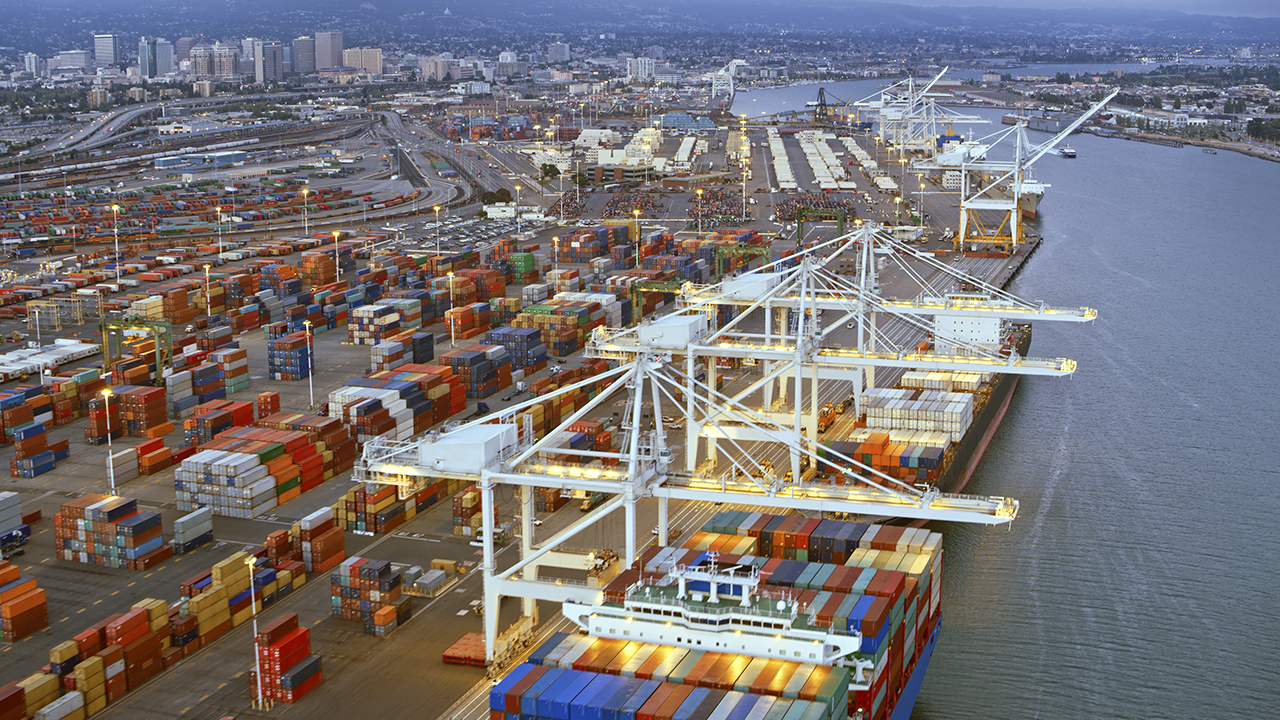
Goods stuck at ports. No one to unload the ships, no one to load the trucks, no one to drive the trucks.

The result: empty shelves in the stores.
It will be a cold and lean holiday season this year.
Feel the collapse 31
Resist not evil (Matthew 5:39 KJV)
In humility count others more significant than yourselves (Philippians 2:3 English Standard Version)
Victor Davis Hanson writes at American Greatness:
Americans are growing angrier by the day in a way different from prior sagebrush revolts such as the 1960s Silent Majority or Tea Party furor of over a decade ago.
The rage at the current status quo this time is not just fueled by conservatives. For the first time in their lives, all Americans of all classes and races are starting to fear a self-created apocalypse that threatens their families’ safety and the American way of life.
The border is not just porous as in the pre-Trump past. It is nonexistent. Some 2 million people may cross illegally in the current fiscal year—with complete impunity.
There is zero effort to stop them. Officials daily hector Americans to get vaccinated and tested for COVID. But they are mute about illegal entrants, some of them infected with the virus.
Joe Biden has conceded that his hold on housing evictions deliberately defied a Supreme Court ruling. He added that he probably did not have the legal authority to ignore the court, but did not really care.
As in the case of demolishing immigration law, the president seems either unaware or proud that he is insidiously dismantling the Constitution.
America has never quite seen such overt and multifaceted efforts to undermine the foundations of free-market capitalism.
At a time of resurging GDP, low unemployment, and record worker shortages [thanks to Trump – ed.], Biden has announced that renters can continue to avoid paying what they owe their landlords—even after a prior year of such free housing.
In a rebounding economy amid record debt, the government is still sending workers unemployment benefits that are more remunerative than the paychecks they would earn if employed.
Such insanity means not only that labor-short employers cannot provide goods and services to American consumers. The new ethos also institutionalizes the pernicious idea that it is smarter to stay home and idle than to get a job and be productive.
Biden is also considering further extending exemptions for the repayment of $1.7 trillion in student loans. That amnesty will only further mainstream this growing notion that borrowing money entails no legal or moral obligation to pay it back.
No one seems to acknowledge that both students and the universities—which lured them to borrow—knew exactly the risks they were taking. Meanwhile, millions of American youth, the working classes who choose not to attend college, and those who paid their loans off or whose parents saved enough over the years to cover their tuition obligations, will subsidize those who renege of their debts by paying higher taxes.
Inflation is roaring back as the administration is printing trillions of new dollars that do not reflect commensurate gains in productivity or population.
Soaring prices are a direct result of incentivizing the unemployed not to work, while discouraging manufacturers and producers of food, gas, oil, timber, mineral, and metals.
The crime wave likewise is not accidental. It is the logical result of deliberate nihilistic policies of releasing thousands of criminals from jails and prisons, defunding and defaming the police, and empowering woke mayors and prosecutors to contextualize crime as the fault of society, not of the criminal.
In response, millions of Americans now simply avoid the mayhem and chaos of blue-state big cities.
Race relations have regressed 50 years. Under the fad of critical race theory, the color of our skins is now deemed essential to who we are.
The current woke revolution is an elite, top-down effort to smear the nation as some sort of contemporary racist hellhole.
All this multifaceted chaos is not just faculty lounge stuff. We are beginning to see the collective craziness filter down to disruptions in our everyday lives.
Airliners cannot take off due to fuel shortages. Automobiles, houses, gas, and lumber are in short supply.
Consumers can’t get their roofs fixed or their houses painted or the trees trimmed as employers plead to their idle government-subsidized employees to come back to work.
No one knows whether our laws even still exist—or at least exist haphazardly depending on who breaks them.
Thieves steal with brazen impunity.
Scared Americans have lost faith in the FBI, the CIA, the Pentagon, the CDC, and most of the federal bureaucracies that are as politicized as they are increasingly incompetent.
What started out as elite woke nonsense now warps everyone’s daily life. If we don’t wake up from wokeness, we will continue on our sure trajectory to self-inflicted, systemic paralysis—followed by civilizational collapse.
Accused by the ruling elite, many Americans are doing penance for actions they never took, words they never spoke, ideas they never thought. They plead guilty to being oppressors. In penance they hand power to their destroyers and abase themselves.
Why do millions of Americans accept the accusation that they are guilty of oppressing minorities when they are doing no such thing?
Could it be because a religion, still common to millions of Americans, taught self-abasement to generation after generation? Taught that you were born guilty? That you must always put the wants of others above your own?
That you must not resist evil?
America going down? 29
Is America in decline?
Don Feder, writing at Front Page, thinks it is:
The 20th century – the American century. America’s prestige and influence were never greater. Thanks to the Greatest Generation, we won a World War fought over most of Europe, Asia and the Pacific. We reduced Germany to rubble and put the rising sun to bed.
It set the stage for almost half a century of unprecedented prosperity. We stopped the spread of communism in Europe and Asia, and fought international terrorism. We rebuilt our enemies and lavished foreign aid on much of the world.
We built skyscrapers and rockets to the moon. We conquered Polio and COVID. We explored the mysteries of the Universe and the wonders of DNA, the blueprint of life.
America has moved from a relatively free economy to socialism – which has worked well nowhere in the world. We’ve gone from a republican government guided by a constitution to a regime of revolving elites. We have less freedom with each passing year.
Like a signpost to the coming reign of terror, the cancel culture is everywhere. We’ve traded the American Revolution for the Cultural Revolution.
The pathetic creature in the White House is an empty vessel filled by his handlers.
In 1961, when we were young and vigorous, our leader was too. Now a feeble nation is technically led by the oldest man to ever serve in the presidency.
We can’t defend our borders, our history (including monuments to past greatness) or our streets. Our cities have become anarchist playgrounds.
We are a nation of dependents, mendicants, and misplaced charity. Homeless veterans camp in the streets while illegal aliens are put up in hotels.
The president of the United States can’t even quote the beginning of the Declaration of Independence correctly. Ivy League graduates routinely fail history tests that 5th graders could pass a generation ago.
Crime rates soar and we blame the 2nd. Amendment and slash police budgets.
Our culture is certifiably insane. We have men who marry men. Men who think they’re women. People who fight racism by seeking to convince members of one race that they’re inherently evil, and others that they are perpetual victims. A psychiatrist lecturing at Yale said she fantasizes about “unloading a revolver into the head of any white person.”.
We slaughter the unborn in the name of freedom, while our birth rate dips lower year by year.
Our national debt is so high that we can no longer even pretend that we will repay it one day. It’s a $28-trillion monument to our improvidence and refusal to confront reality.
Our “entertainment” is sadistic, nihilistic and as enduring as a candy bar wrapper thrown in the trash. Our music is noise that spans the spectrum from annoying to repulsive.
Patriotism is called insurrection, treason celebrated, and perversion sanctified.
A man in [police uniform] blue gets less respect than a man in a dress.
We’re asking soldiers to fight for a nation our leaders no longer believe in.
How meekly most submitted to Fauci-ism (the regime of face masks and hand sanitizers) shows the death of the American spirit.
How do nations slip from greatness to obscurity?
-
- Fighting endless wars they can’t or won’t win
- Accumulating massive debt far beyond their ability to repay
- Refusing to guard their borders, allowing the nation to be inundated by an alien horde
- Surrendering control of their cities to mob rule
- Allowing indoctrination of the young
- Moving from a republican form of government to an oligarchy
- Losing national identity
- Indulging indolence
In America, every one of these symptoms is pronounced, indicating an advanced stage of the disease.
Is the entire Western world declining?
Is any country rising in power, militarily strong, stabilizing or increasing its fertility rate, self-sufficient in energy production, enjoying a rising standard of living, gaining from foreign trade, maintaining high standards of education, continually innovating?
Or is human life everywhere getting worse?
Marxism-Schwabism: or the dictatorship of the tycoons 196
The silly-billy tyranny exerted shamelessly now by the Obama-Pelosi gang through a puppet president, nasty as it is, may be short-lived because nonsense cannot endure. But the real power, the serious power, lies elsewhere, with the financial institutions.
They have an agenda to reduce us all to serfdom.
We summarize an article by Justin Haskins at Townhall:
In June 2020, elites from around the world announced [from a “virtual Davos meeting”] the launch of a plan to “reset” the entire global economy.
Every country, from the United States to China, must participate in the Great Reset, and every industry, from oil and gas to tech, must be transformed. So wrote Klaus Schwab, the founder and executive chairman of the World Economic Forum.
Although Great Reset supporters call for dramatic expansions of government welfare programs, including job guarantees, government-provided health care, etc.,the heart of the Great Reset is something called environmental, social, and governance (ESG) metrics. Those include how “green” a company is, its “right” ratio of minorities, whether a business is involved in politically disfavored industries such as gun manufacturing and sales. According to its ESG metrics, a company is accorded a rating.
Bank of America, Citi, Goldman Sachs, Morgan Stanley, JPMorgan Chase, Wells Fargo – the six largest banks in the United States – have announced their commitment to the Great Reset. (So has Mastercard.)
Individuals should also expect to be “rated” by these financial institutions. If you want a loan from one of those banks in the future, you’d better toe the globalist line on climate change.
If banks are allowed to collectively decide to stop financing any group of people they want, based not on financial concerns but ideological considerations, then banks and their Great Reset allies will have, in effect, near-total control over society.
In January 2021, the Trump-era Office of the Comptroller of the Currency issued a finalized Fair Access to Financial Services regulation that would have made it illegal for large banks to engage in that sort of discrimination. But just one week after entering the White House, President Joe Biden “paused” the rule’s implementation, signaling his clear intention to eliminate the rule before it ever has a chance to be published in the Federal Register. No surprise. The Biden administration’s “climate czar” John Kerry is an ardent supporter of the Great Reset.
The time has come for a massive populist revolt against the Great Reset. The fate of the free world depends on it.